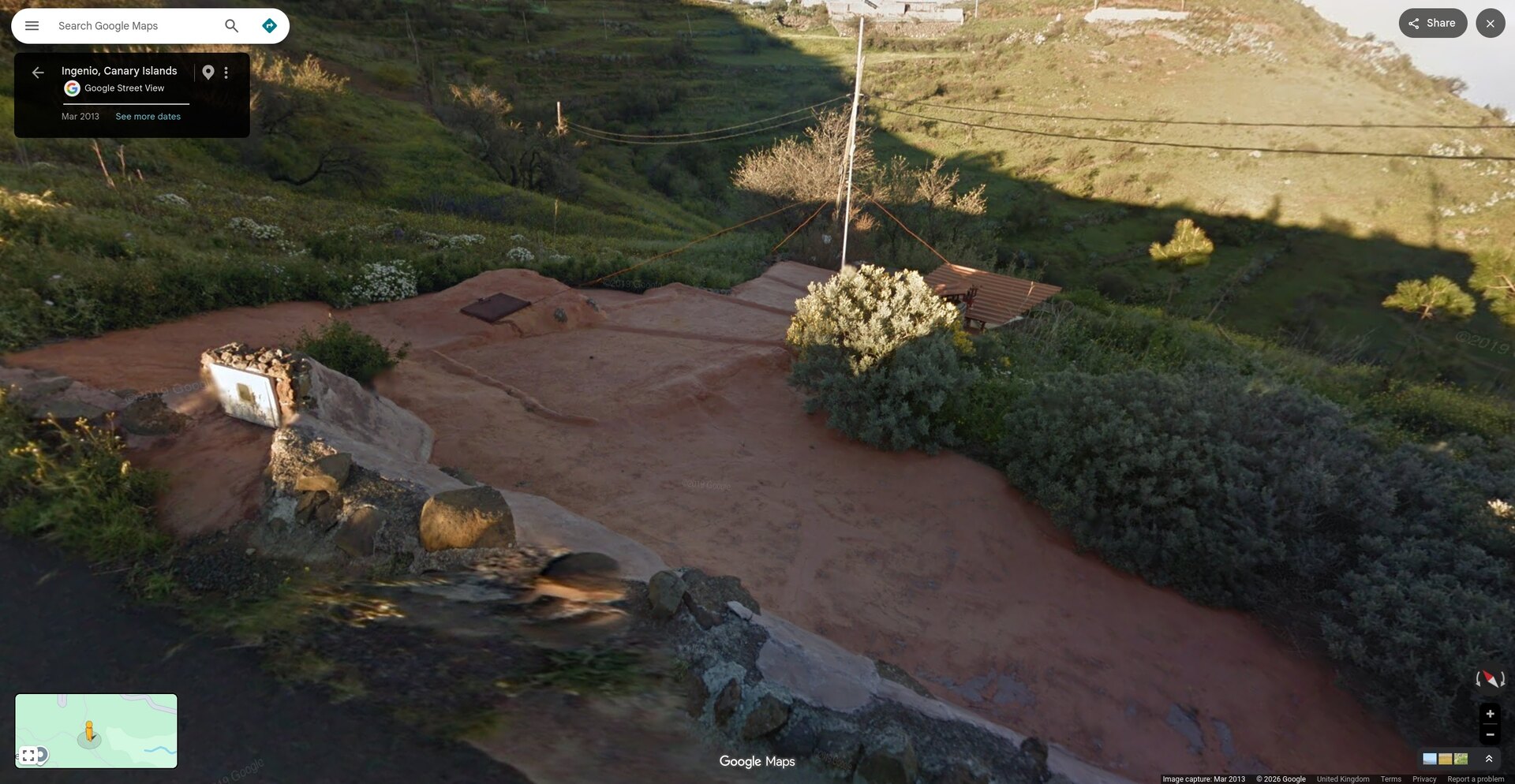
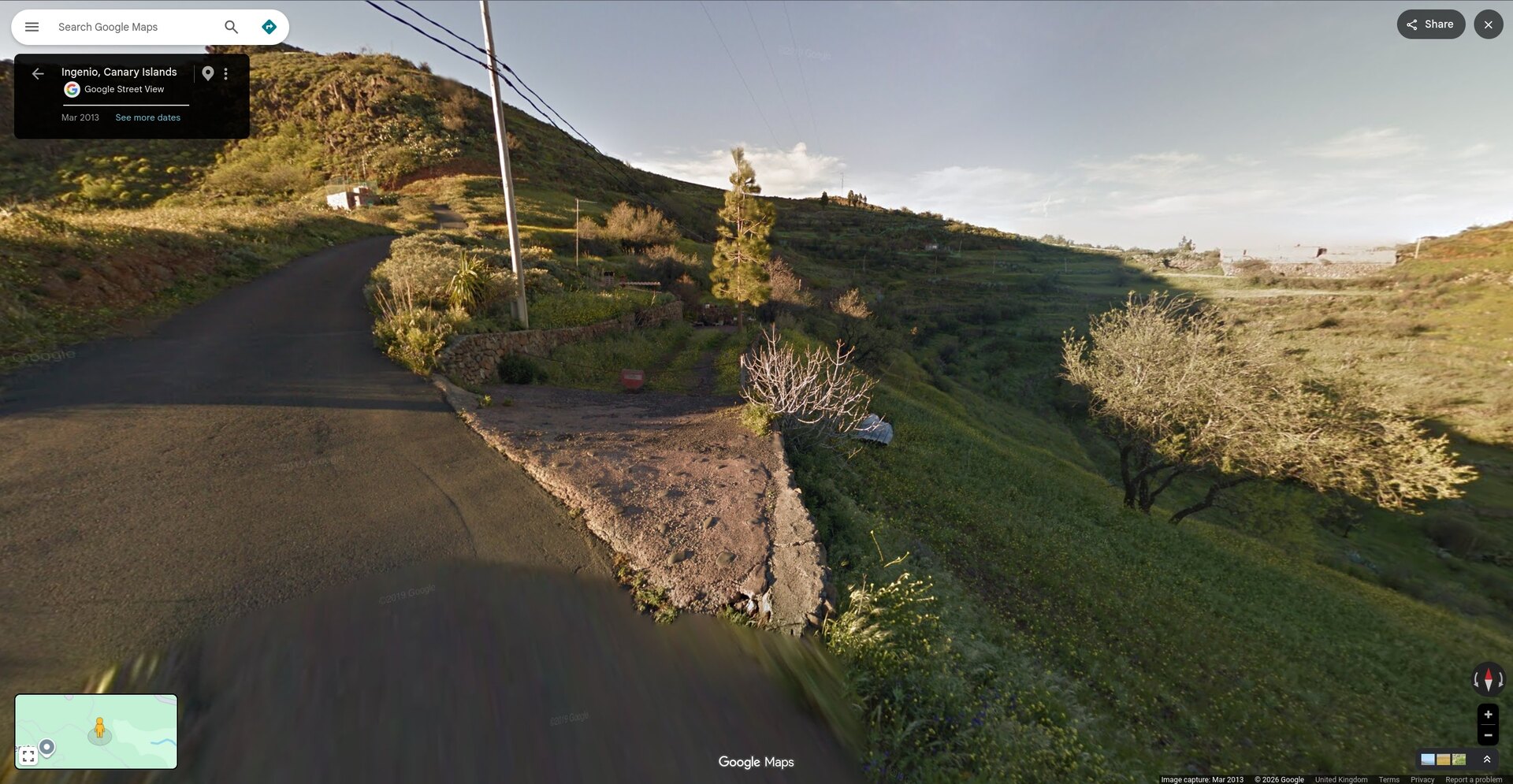
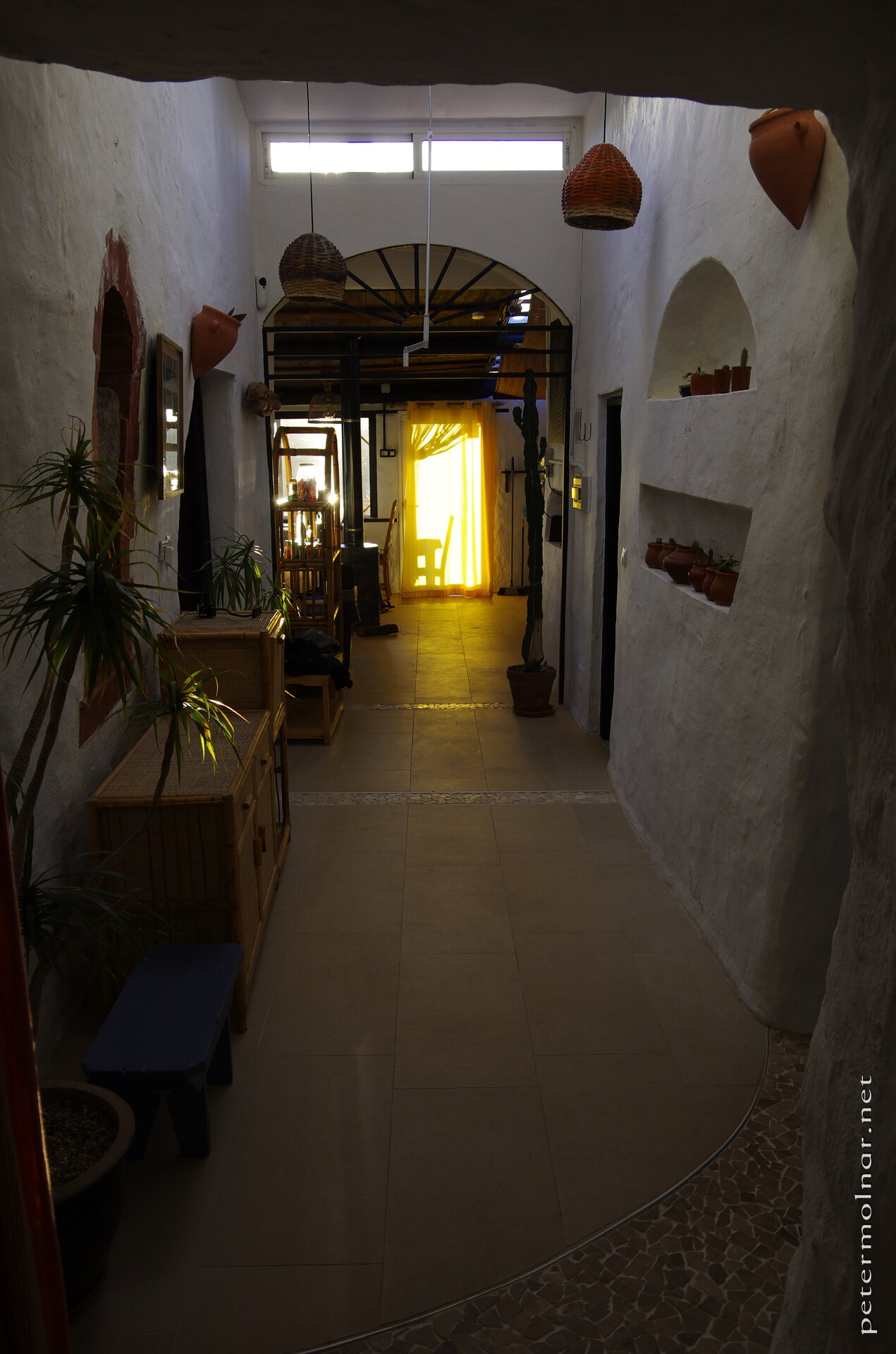
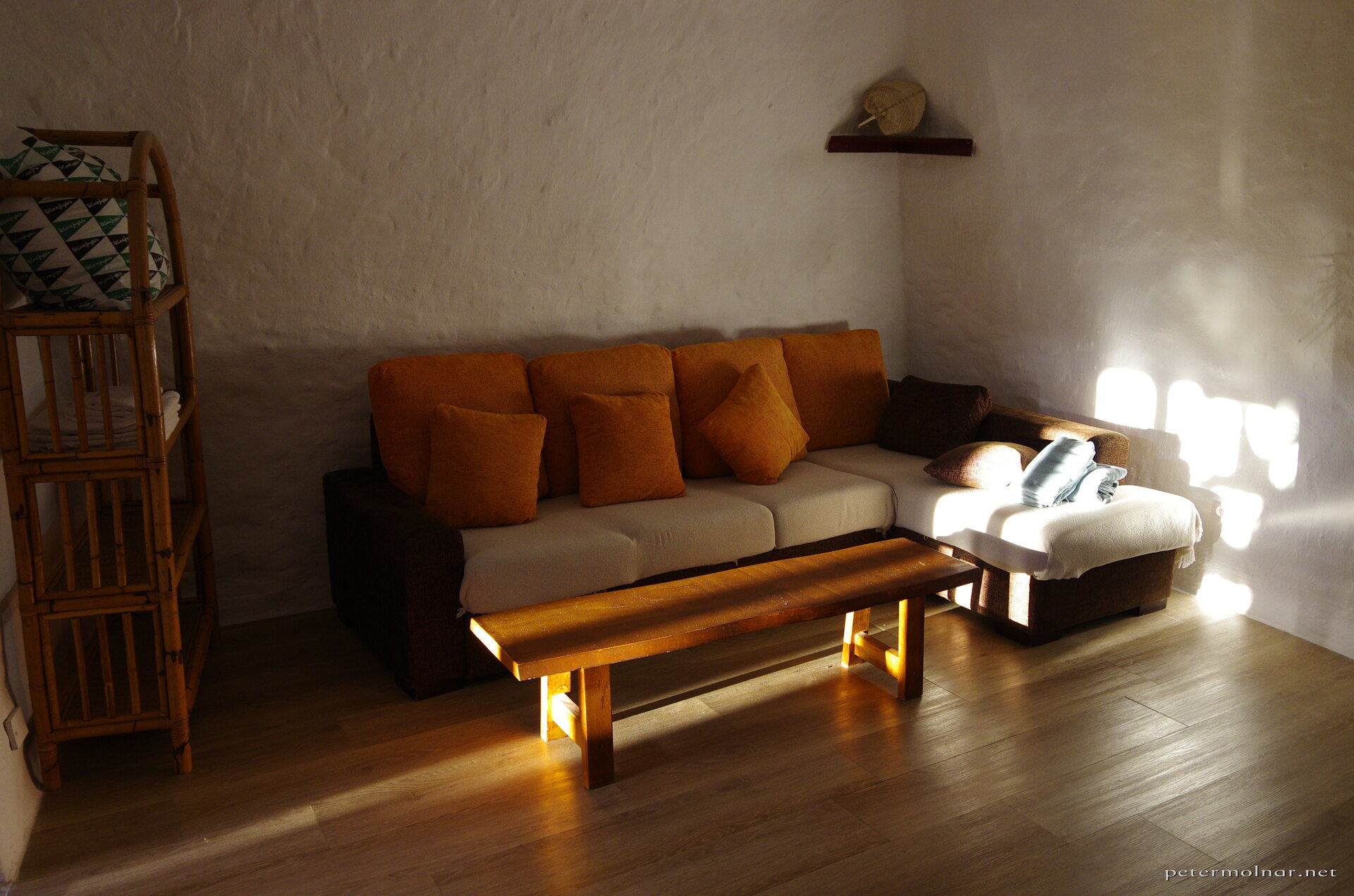
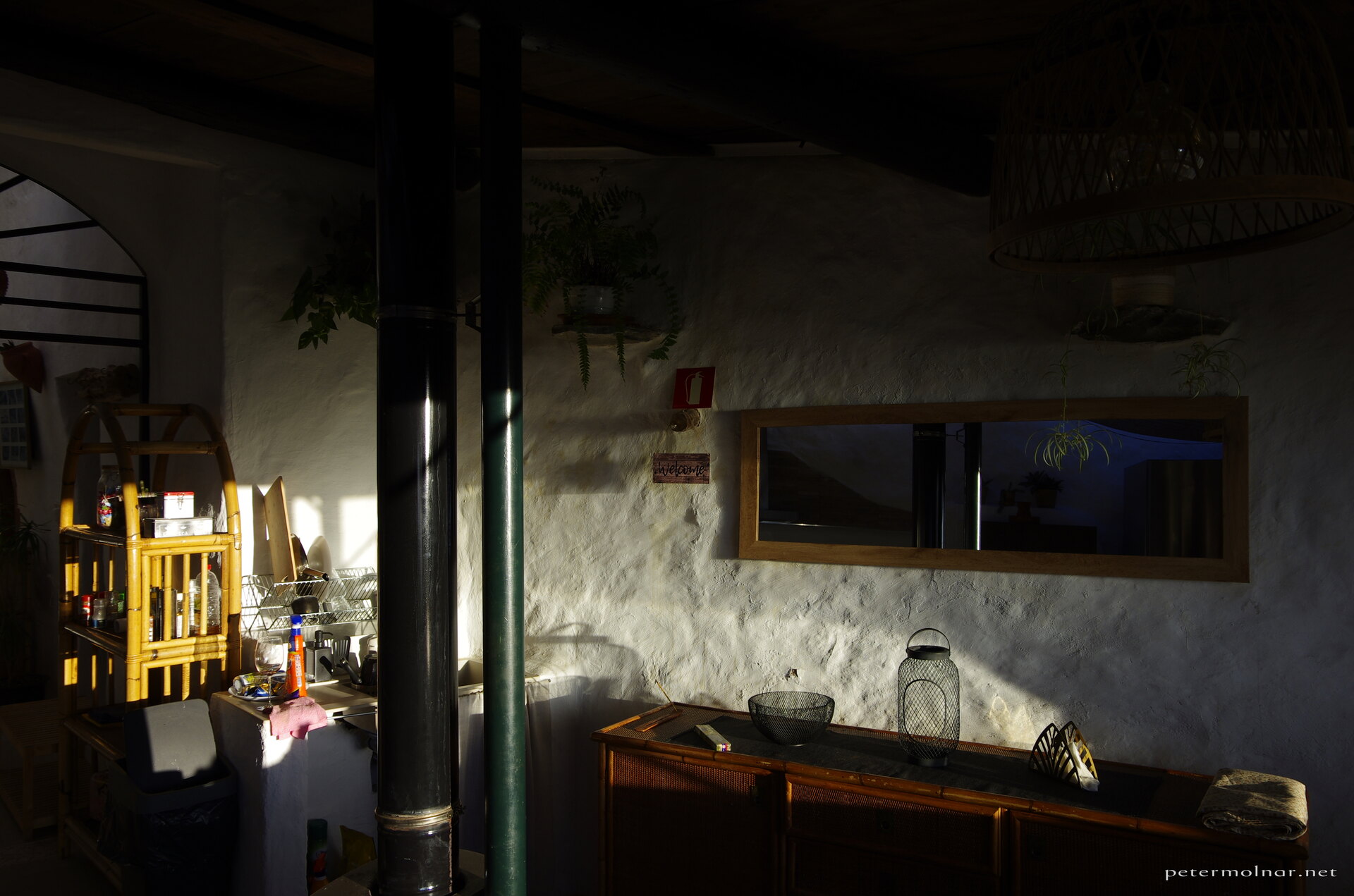
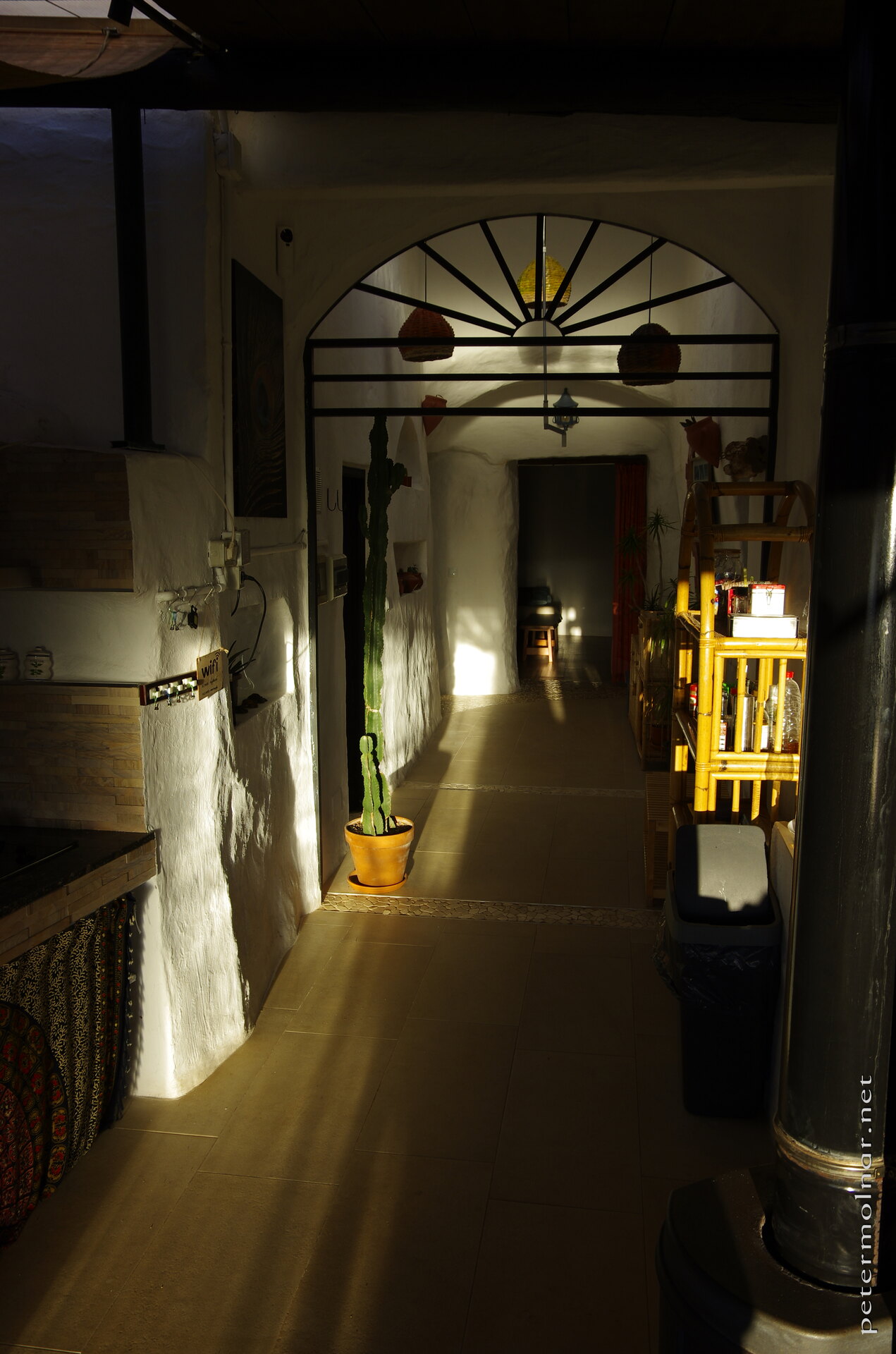
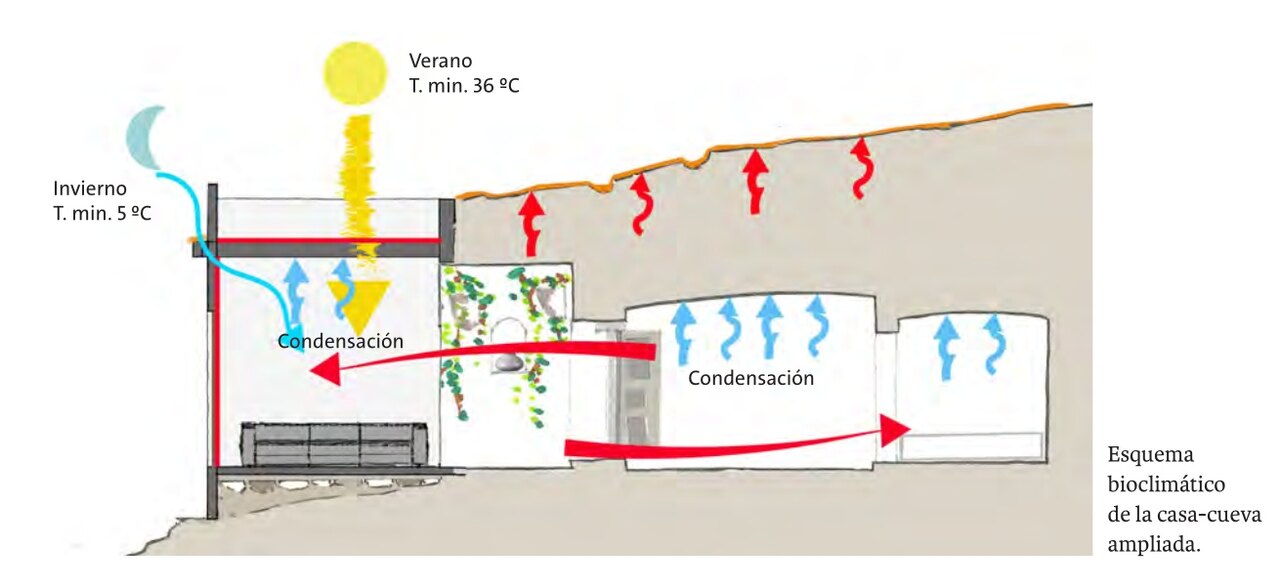
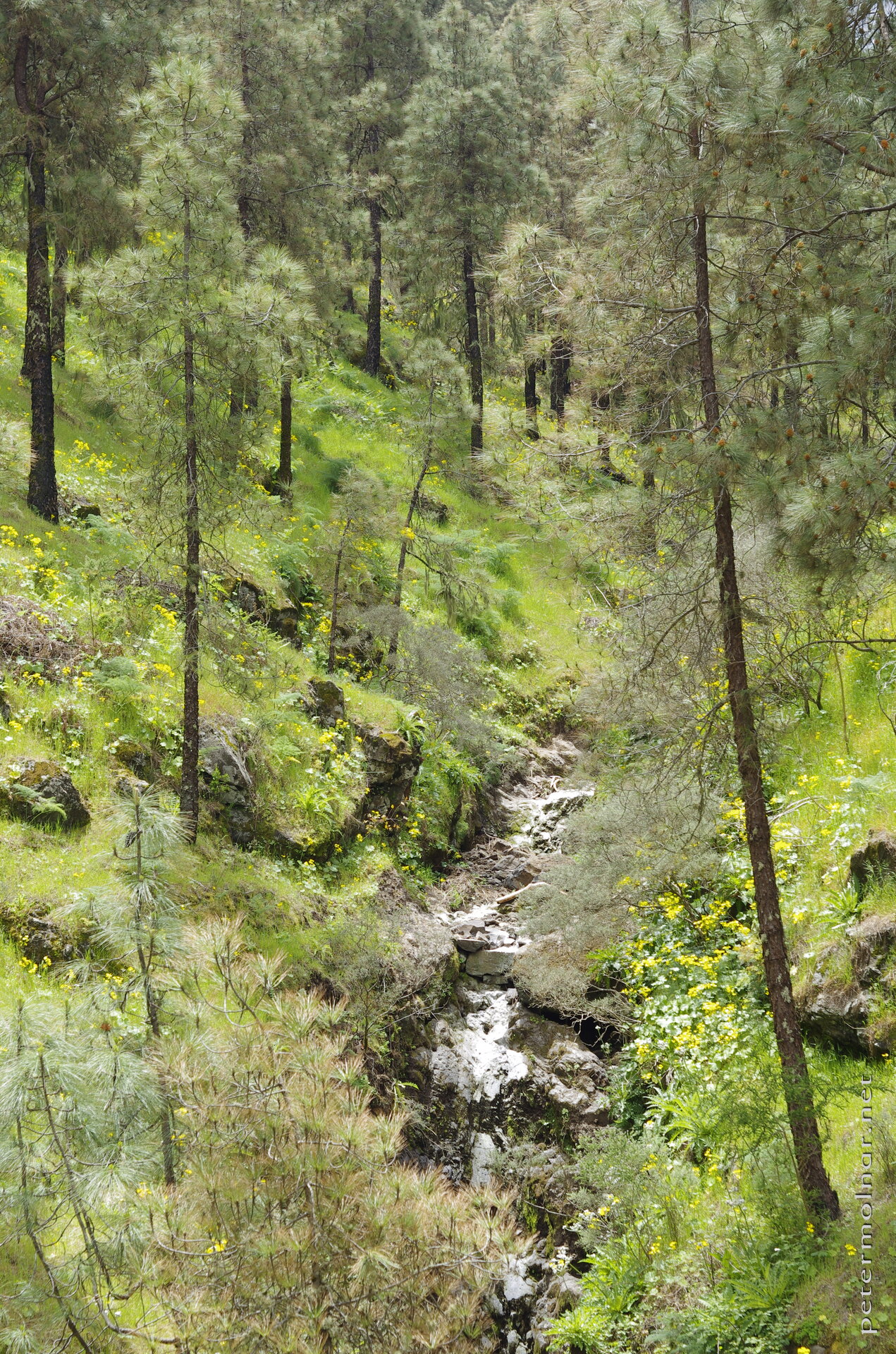
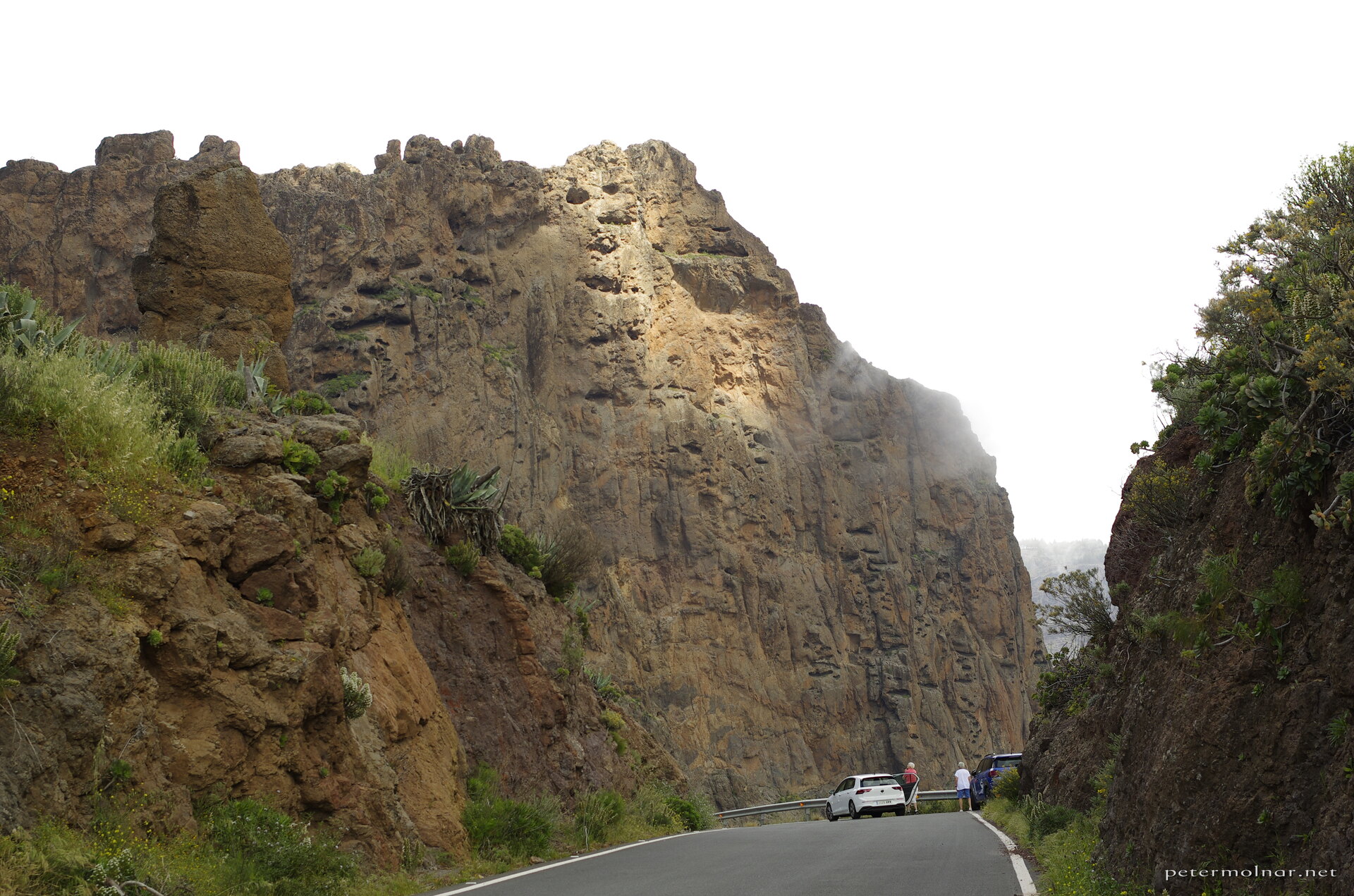
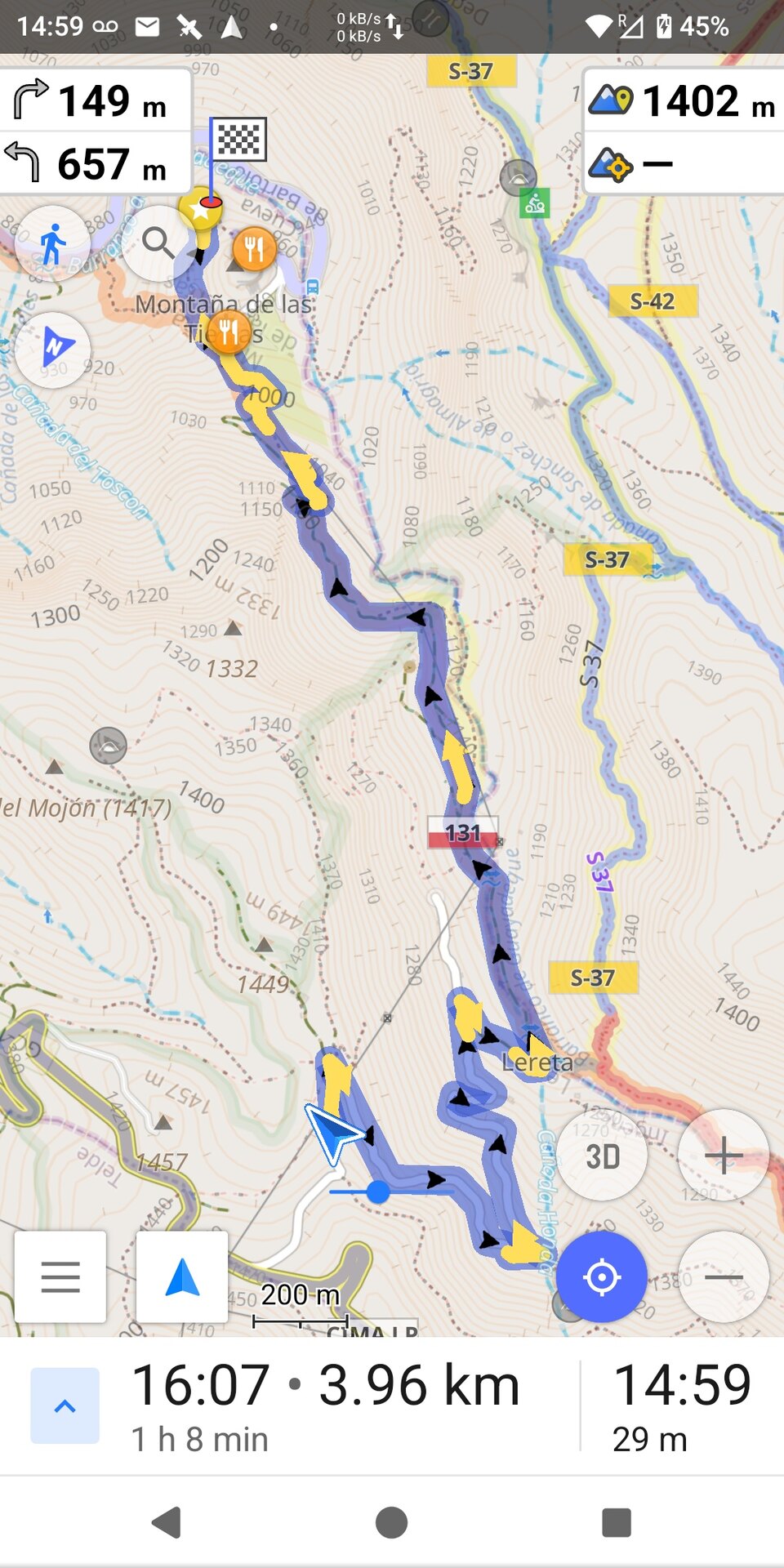
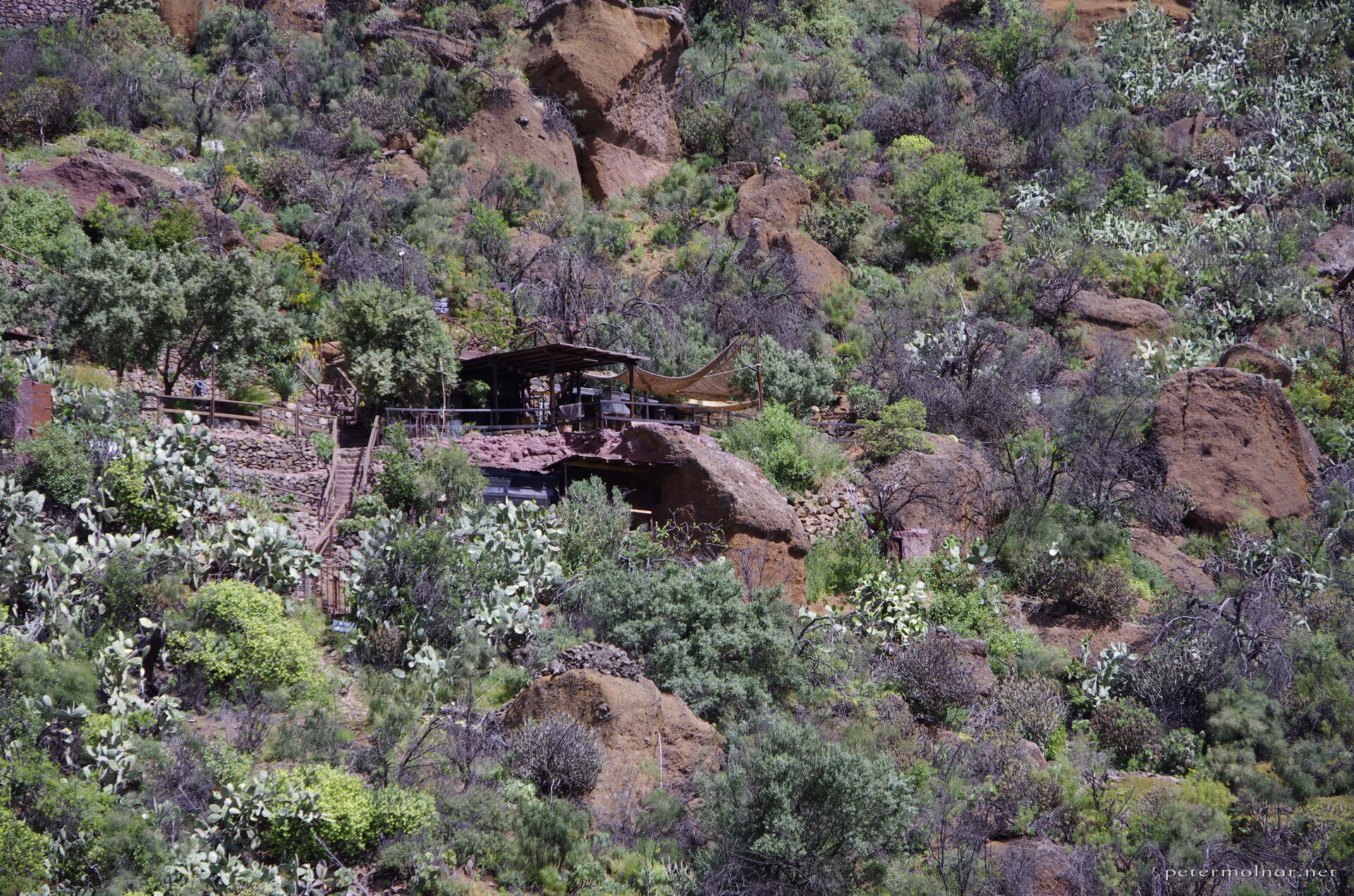
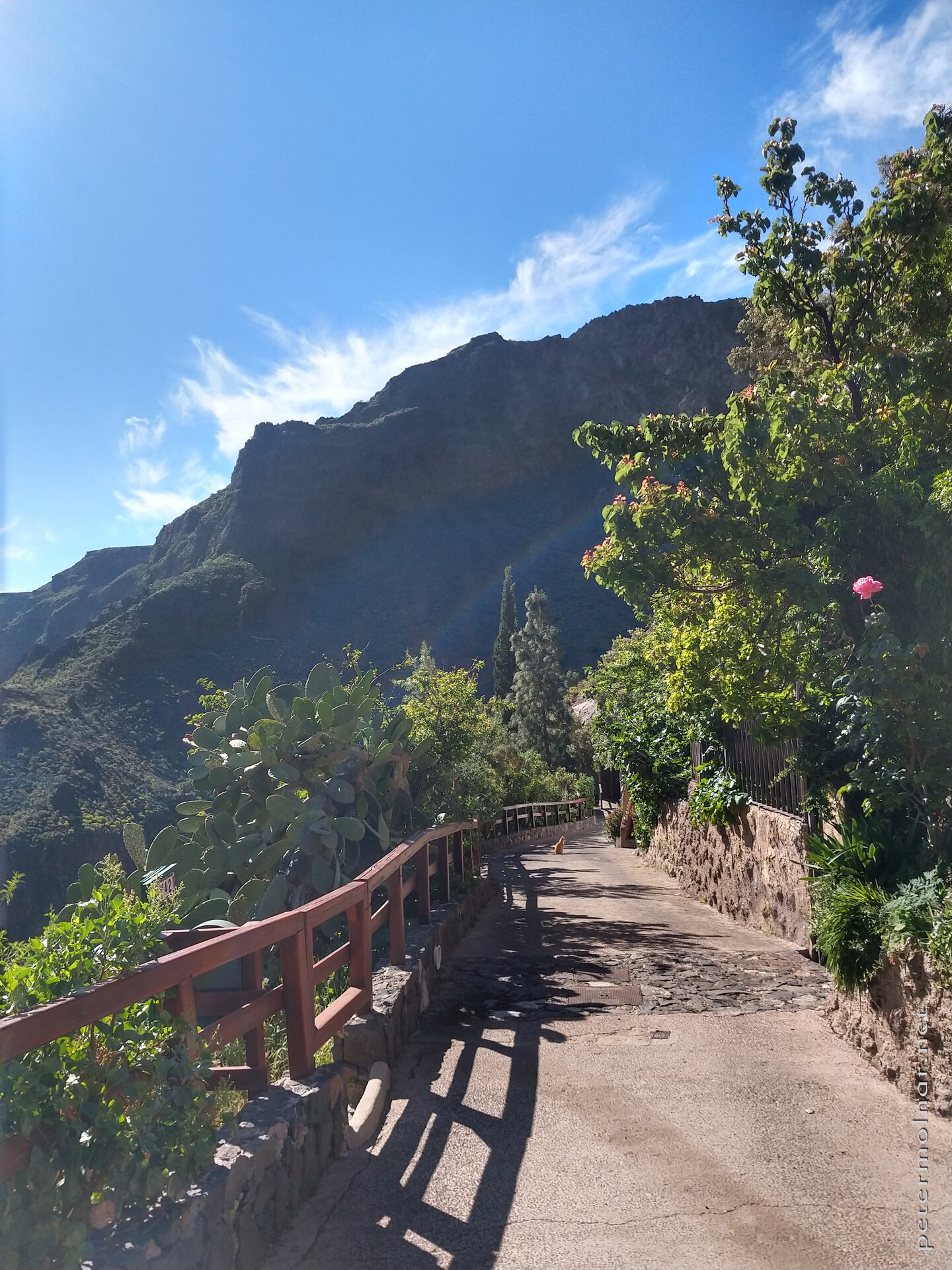
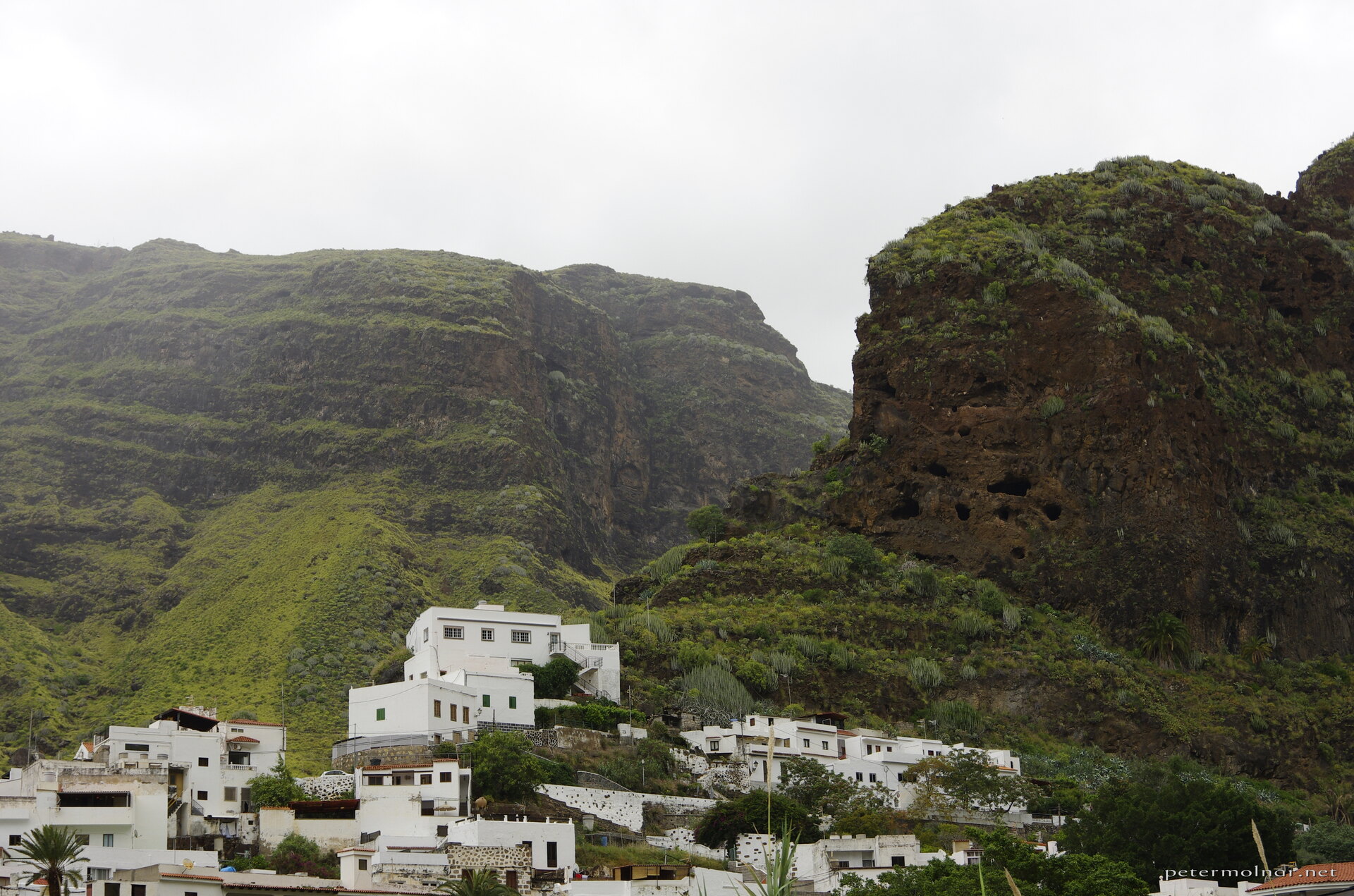
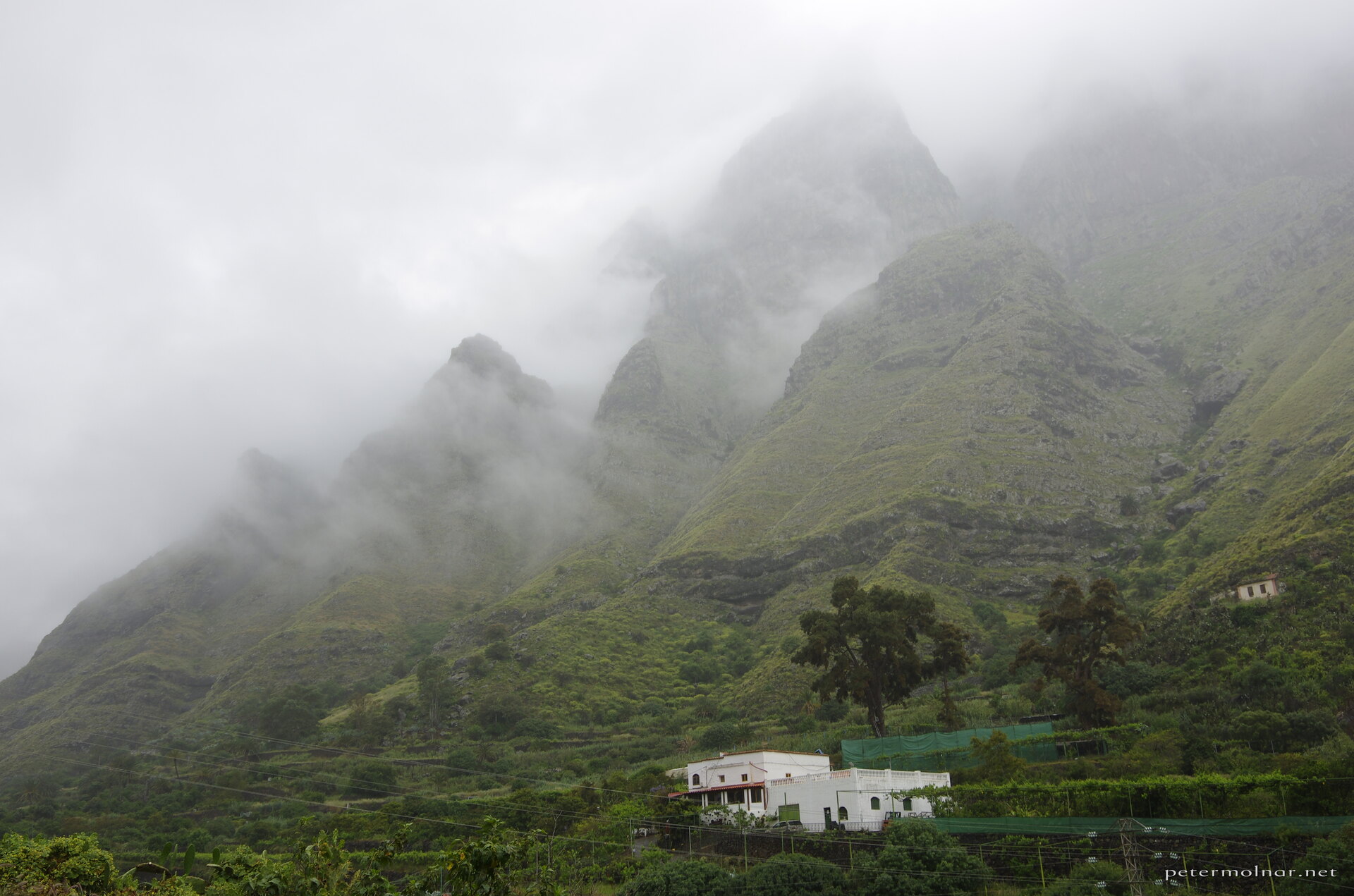
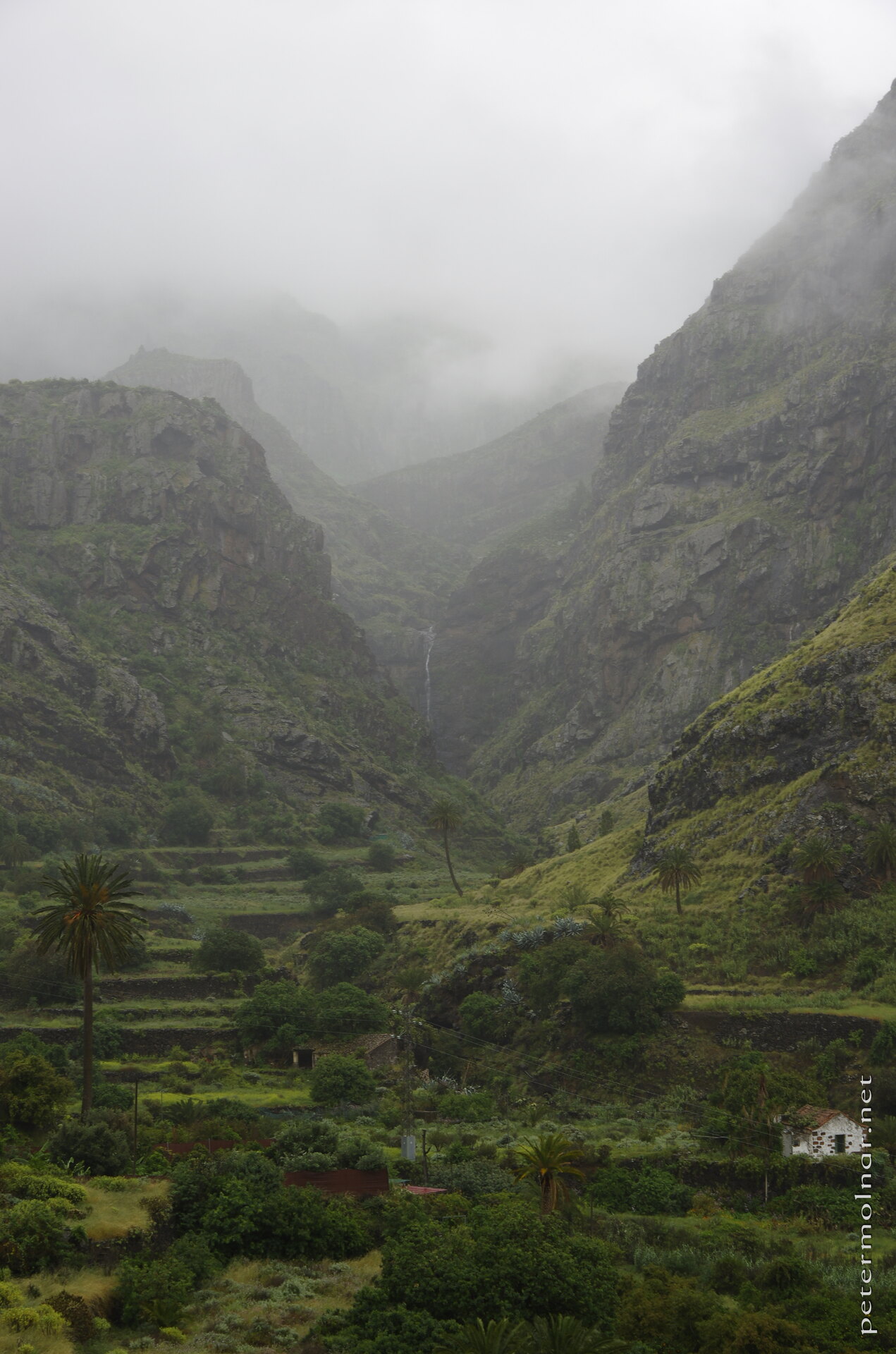
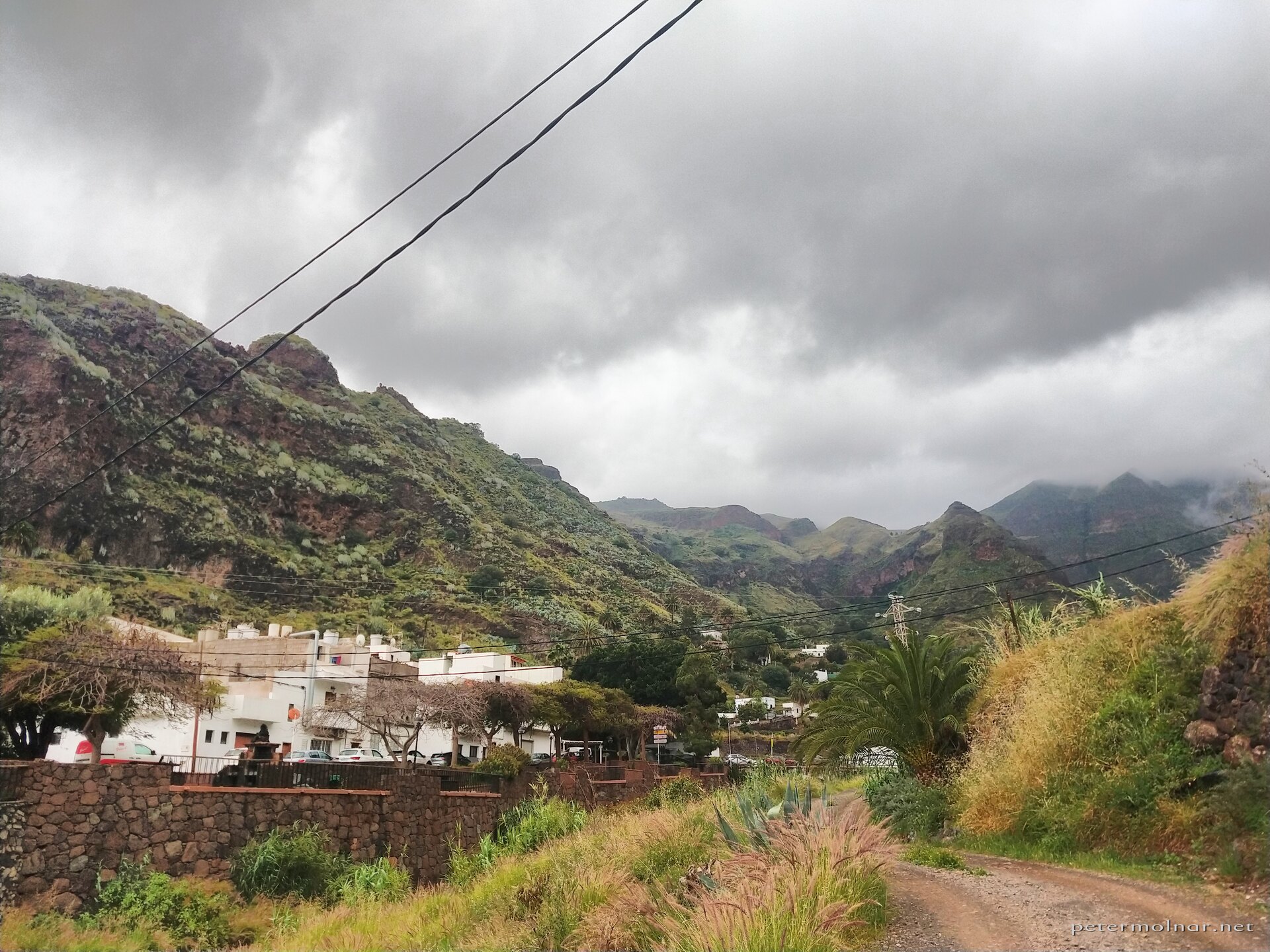
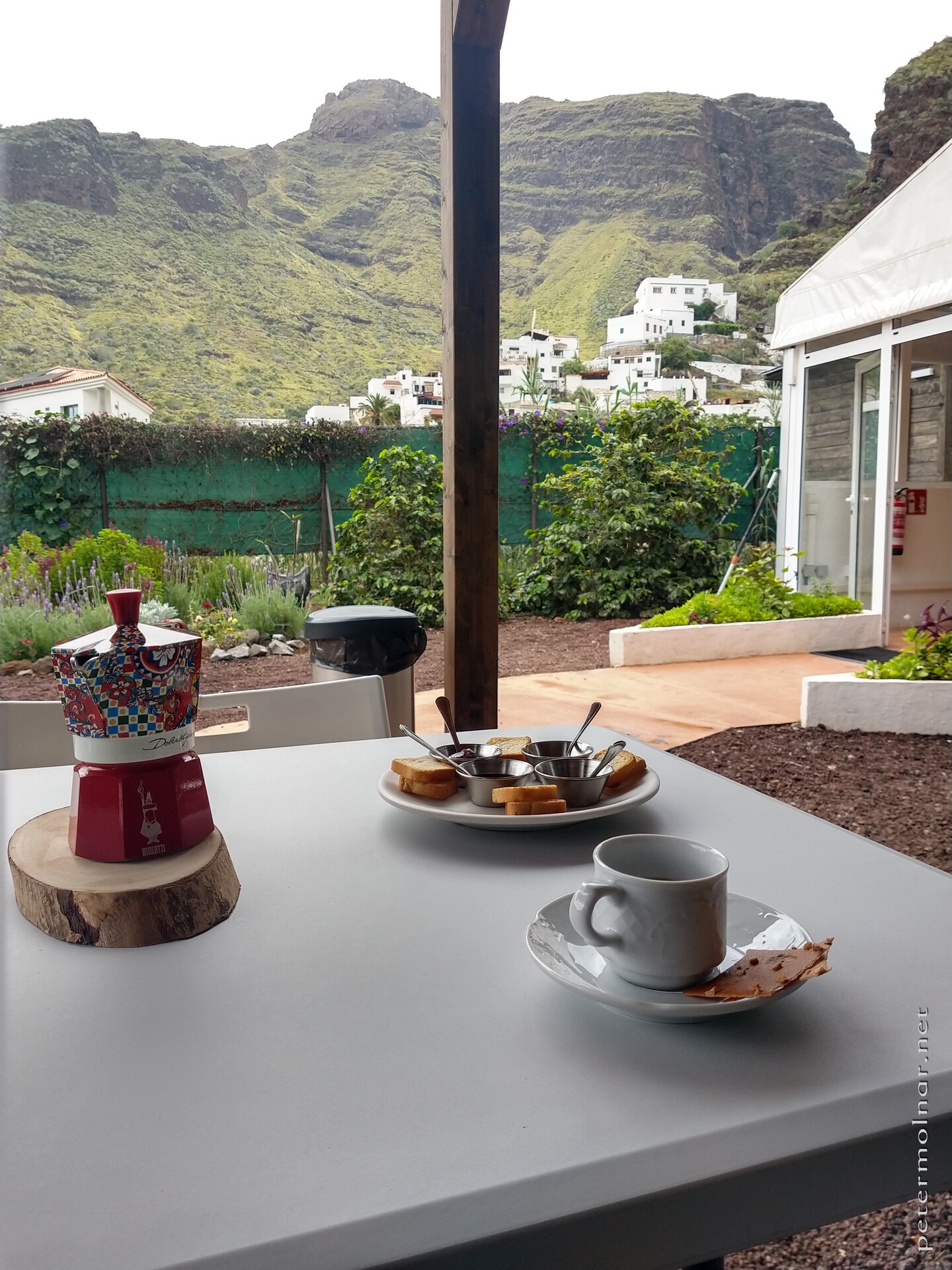
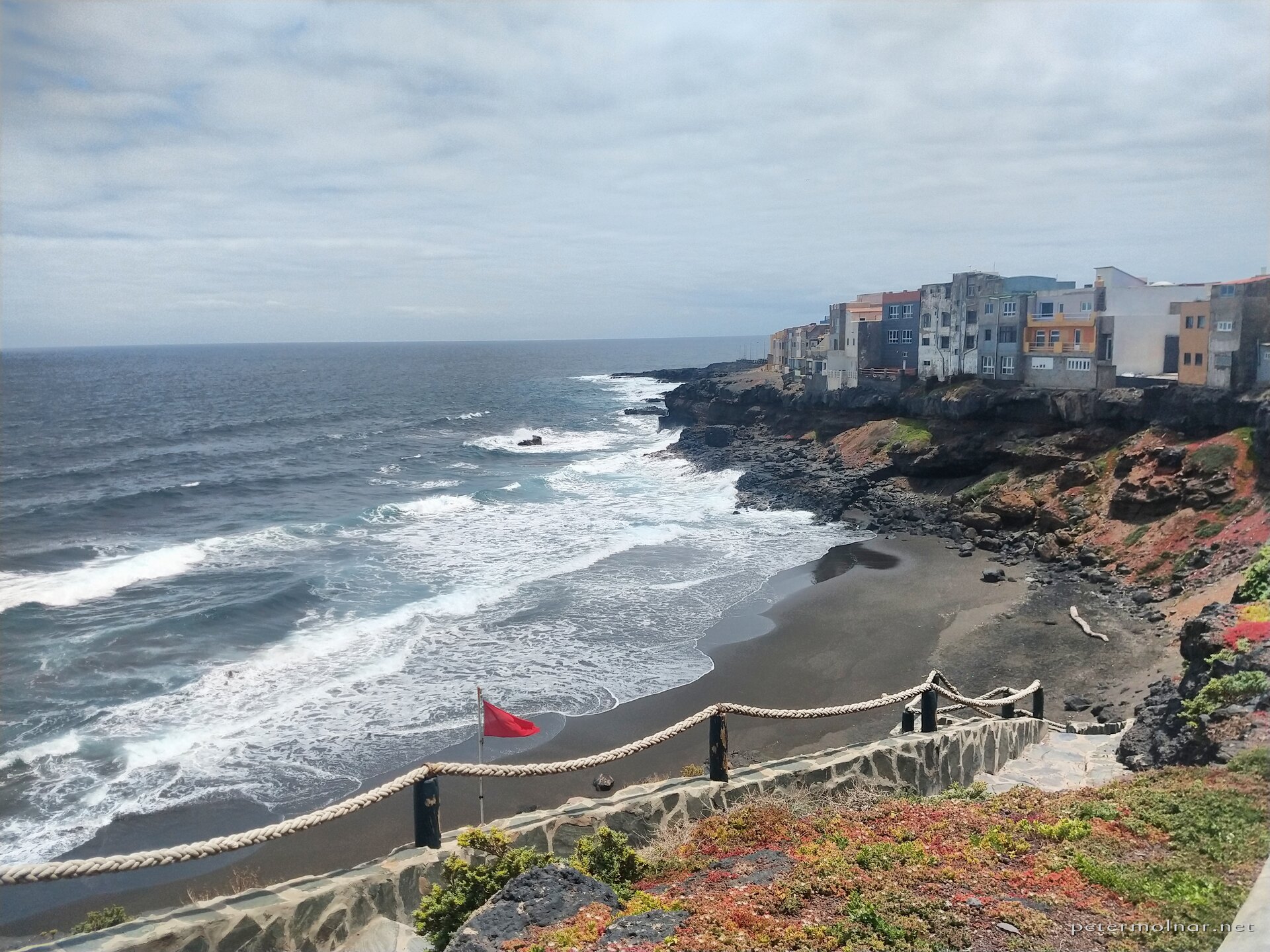
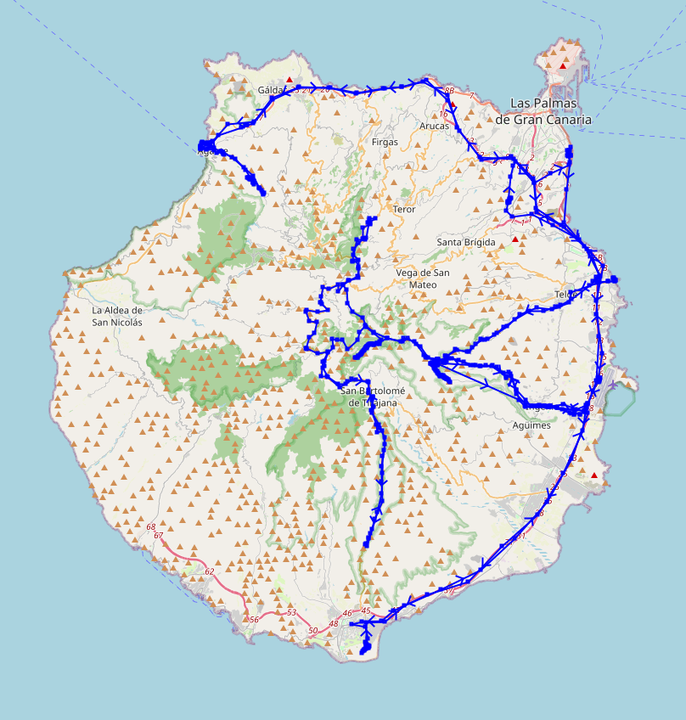
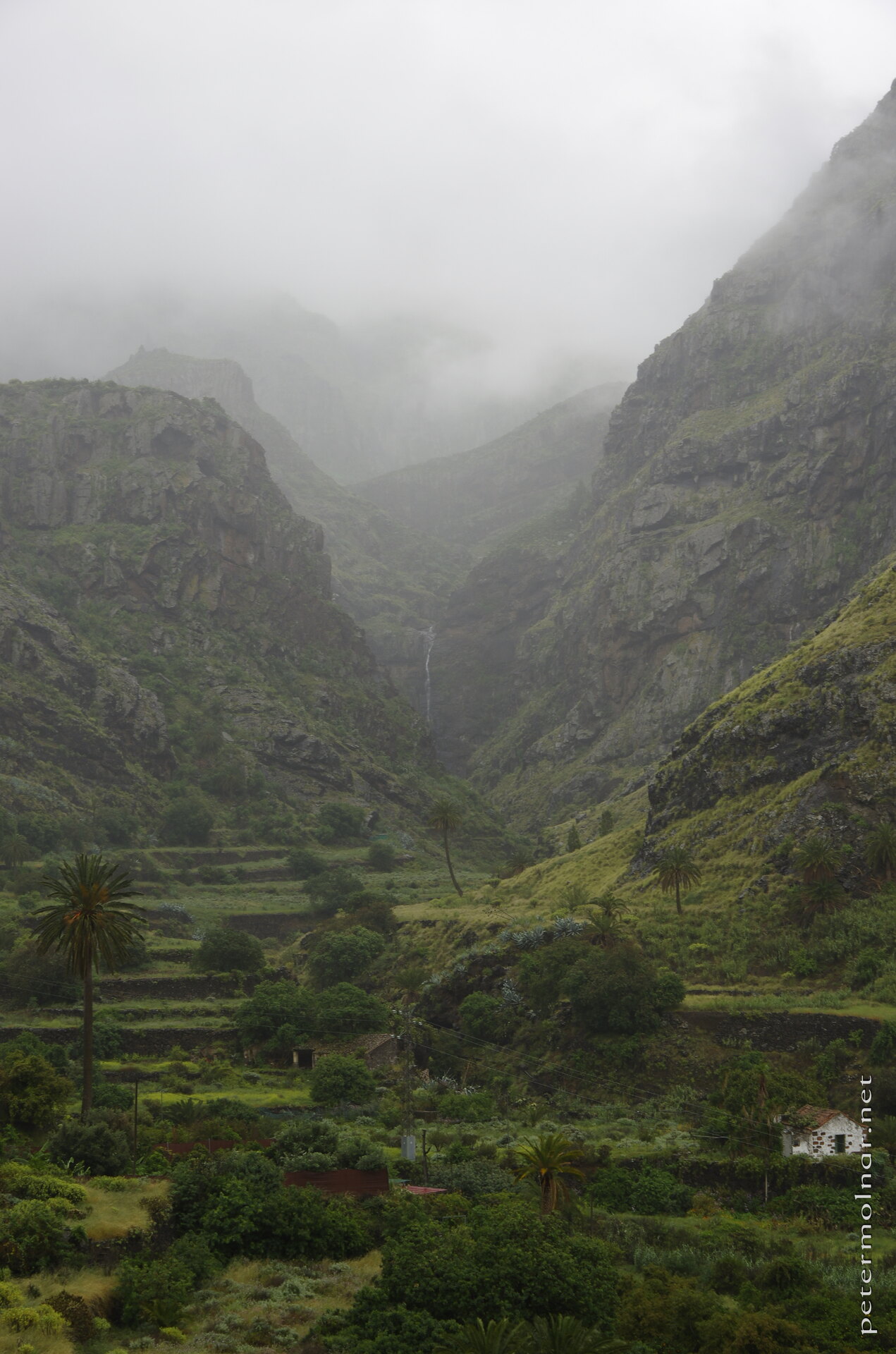
Due to some road closures I moved my openstreetmaps planned journey through the mountains to more cave houses up one day, and it was definitely worth it. The view is magnificent - squint, the ocean is right at the end -, if you leave early enough in April, like I did, beyond the buzzing and humming of bees, there's only peace around.
My first destination on Gran Canaria was the pine forest close to me. I've been to southern pine forests at other locations, but that wonderful, serene scent that a canary pine forest disperses when the full sun warms them up is second to none.
This post is a reply to:
It really is the stupid phone ruining everything isn’t it? The stupid screens of doom and the stupidity of the world isn’t it?
Yes.
However, it's not the device itself, and not the base functionalities of the device. I remember a series from my youth - "Den korsikanske biskopen"1 - where the kids had these fantastic gadgets with video calls and other features, and I always marvelled at it.
I think the major difference was that those gizmos were something of a closed circuit, an semi-offline-ish thing: knowledge in your pocket, communication with friends. The utopistic gadgets never have the option to browse the news - an important feature to use them only when needed.
What they also didn't do is broadcasting.
The "free" broadcasting the wider internet brought is dismal. Most can't make sense of it, and it turns into vanity, into narcissism. Blogs were open diaries, were a way to, with an alter ego, share what we may not have been brave enough, or didn't have the stage to share within out normie life. Instagram, TikTok, and the rest, on the other hand, are bringing the worst out of people: not for the sake of being themselves, but to be something people can follow.
Some of the modern internet is incredible, but look at the times from before the iphone: there was less vanity, no instagram and tiktok brainrot - albeit Ren and Stimpy and Happy Tree Friends were hardcore.
These should not be in our pockets; it's a weigh that is dragging everyone down into a swamp.
Death to varying temperature! Death to day and night! Death to
shorter and longer days! Death to all cycles natural! Death to the
demoness Allegra Geller! Death to Pilgrimage! Death to transCendenZ!1
Apologies for the bombastic first few lines, I thought I'd try to capture the essence of what is about to follow, but I got carried away.
Yesterday I was walking back home and noticed how, before reaching the roundabout, the lights are still sodium-vapour (natrium for the sensible world) lamp, whereas after it the lights are white LEDs. For a moment an ISS photo of the East/West Berlin line came to my mind2:
I'm from Hungary, and night always meant the deep yellow of the sodium lamps. As more and more research went into it it turned out sodium lamps are absolutely ideal for nights: our human eyes are quite sensitive it's very narrow light spectrum (it's yellow, and only yellow, if you think you see any other colours with it, look again), they are elegantly energy efficient, and night life is barely disturbed by them.
But lately it's all cheap, badly designed, shitty LEDs everywhere, which aren't even saving considerable money, as those sodium lamps are nearly as efficient. The retail park in Cambridge now has some purple street lamps, because they are so cheap LEDs that their coating disintegrated, allowing the purple/UV spectrum to burst through3.
One of my life hacks was that I kept using a halogen bulb in my desk lamp. It just feels more natural, and the excess heat from it literally warms me up, which is not something to dismiss in the glorious UK winter.
Unfortunately I got curious, and the promise of better angles and less desk space sounded wonderful, so I bought a second hand BenQ ScreenBar. It took me months to realise that it was sucking the life, the creativity, and the will out of me.
I don't have a scientific explanation, but once I put my trusty IKEA desk lamp back with that halogen bulb I finally regained some of my stubbornness to do things. Is it CRI? Is it the colour temperature? Is it the infrared emissions? I don't know, and neither do others, but LED lighting is lifeless4. You can get away with it as some places, and it makes decent Christmas tree lights, for me, it's horrible as desk lighting.
Those LED street lights could also be better. Philips installed red, bat-friendly night-time lighting5 in 2018 in the Netherlands, and there are promising amber LED street light projects67 - but we'll still light the night up. Because safety, convenience, and... because we're afraid of the dark? Even my desk lamp and it's halogen bulb contributes to this sinister light pollution, which disturbs or vaporises natural sleep and relaxation cycles.
Nowadays, thanks to the pandemic, I work from home. There are social implications and I'm extremely unhappy that my employer got rid of the yearly department and company level gatherings, leaving us with sad, online only events. However, the health benefits are incredible: I don't have to use an AC8.
I know people who go mad in the scourging heat of the British summer, which might even reach 30°C, so they set the AC to 18°C. And then in winter, usually the same people set the AC to 24°C.
The human temperature tolerance is meagre compared to a lot of animals. I have to wear thick wool jumpers (thanks to the universe, Aran knits exist9) below 20°C and shorts above ~26-27°C. I do get uncomfortable working when my room temperature is above 29°C - because it's not meant for working, we should be resting, like people in the mediterraneum used to at midday. I also put the heating on to keep my home above 18°C - which makes me question where us, humans, would be truly comfortable in the world, if we didn't have heating.
So you see: with the pandemic and with working from home I re-gained one, albeit small natural cycle: that winter is colder and summer is warmer.
But what about the other cycles?
What about seasonal eating, about what food should and shouldn't we eat at different times of the day? What about the cycles of shorter and longer day? Shouldn't we align our working and sleeping hours instead of going 9-5 like machines? What about night and day cycles, shouldn't we have actual darkness at some point? About body meridian cycles, one's natural sleep patterns, and so on? Why are we trying to eliminate cycles?
Words from the greatest ever film monologue might be apt here:
Don’t give yourselves to these unnatural men - machine men with machine minds and machine hearts! You are not machines! You are not cattle! You are men!
Charlie Chaplin - The Final Speech from The Great Dictator10
But what if that's the goal, machine men, with machine hearts?
What if all these small cycles are hidden reminders of the one cycle nobody can bypass: that our life begins and ends. That everything decays. Is that why we're trying to murder the nights, the yearly, the seasonal, the daily cycles, so that our own cycle will also stop?
I wouldn't be surprised if the nation leaders recently caught on tape discussing living up to 15011 would think this way. I'm really hoping that Chaplin wasn't wrong, and
The hate of men will pass, and dictators die, and the power they took from the people will return to the people. And so long as men die, liberty will never perish…
still stands.
But to return a bit from the disturbed thoughts maybe the secret is to slowly but steadily embrace what we can.
Working from home opens the door not just for the temperature cycles to creep in, but to have a nap when needed. Blackouts are available to make our rooms truly dark throughout the night. We can email our city councillors to embrace wildlife friendly, more natural street lights. And we can put halogen bulbs into our desk lamps - that is as long as we can buy and stockpile halogen and incandescent bulbs.
eXistenZ (1999) is a dividing film, but I believe it's
genius and disturbing.. SPOILER
During the
movie, Allegra, at one point, at the trout farm, repeats her sentence
exactly the same way, which she previously described to be a tell-tale
of NPCs. In the end both Ted and Allegra behave very much like NPC, with
their expressions, the way of talking, limited reactions, etc. So the
real question is: who is the player? I'm not alone trying to figure it
out: https://moviechat.org/tt0120907/eXistenZ/58c764d26b51e905f682e9ad/The-dog-is-the-proof?reply=58c764d26b51e905f682e9df
https://www.businessinsider.com/divide-between-west-east-berlin-from-space-today-2019-11↩︎
https://hackaday.com/2025/05/30/white-led-turning-purple-analyzing-a-phosphor-failure/↩︎
https://nymag.com/strategist/article/led-light-bulbs-investigation.html↩︎
https://images.philips.com/is/content/PhilipsConsumer/PDFDownloads/Global/Case-studies/CSLI20180612_001-UPD-en_AA-Nieuwkoop-bat-friendly-lighting-case-study-philips-light-recipe-June-18.pdf↩︎
https://www.optic-gaggione.com/materials/amber-optics-for-street-lighting/↩︎
https://www.mic-led.com/news/why-cities-are-vying-for-amber-led-street-light-the-futures-orange↩︎
https://www.charliechaplin.com/en/synopsis/articles/29-The-Great-Dictator-s-Speech↩︎
At the end of 2019 we moved into THE average UK house: the mythical semi-detached, as a friend referred to it. He was brought up in Bath, which, apparently, lacks these omnipresent dwellings, so when he moved out from there and was presented with them - as these were often mentioned as the national average - he greeted them as a beast of myths and legends.
It's a mid 50s Laing Easiform, one of the non traditional constructions - concrete in the UK is non-traditional, given a meagre 100 years of these being built doesn't add up to tradition yet - that was not deemed faulty in the '85 incursion into prefab houses. Possibly because it's not prefab1.
Saying that this house is 3 bedroom is overselling it a bit: there are two large-ish bedrooms, and one ~2.4x2.4m, which became my office and our guest room. Because of this, my desk is rather cramped: it's whole 25 + 80 cm wide, 80cm deep, a now discontinued IKEA Ivar drop down desk, so it can be closed when the room acts as a guest bedroom. I'd definitely love a stereotypical hacker basement2 but I'll work with what I have.
In 2020, when the world was told to stay at home, we bought floorstanding speakers to bring a bit more of the world home. The Panasonic micro bookshelf speakers, SB-PM500 that I got for about £20 when we moved to the UK in 2012 moved up with me. I tried to play with their placement, but you can see, there aren't many good options. I was driving them with a £15 class-D micro amp, a ZK-502T.
Sidenote: for me, it seems like that with cheap class-D amps one needs a lot of luck with speaker pairing. As I wrote before3 moving from a Topping MX3 to a NAD C 316BEE V2, which is still a budget amp, for the Dali Oberon 5 pair we have was an insane difference. Maybe higher end class-D is good, but in my very limited experience, the cheap ones are prone to speaker pairing, so consider getting a used AB class amplifier instead.
Another sidenote: some years ago I had the chance to bring my beloved-as-teen speakers from home - just the speakers, as the CD player of the base unit was dead already (SA-AK18). Since then I learnt the phrase "black plastic crap4" - and once I heard those old, space-grey, futuristic speakers against the small ones, I understood why the term. The smaller ones were better in every possible way, and I ended up donating the old ones. The lesson here: looks are deceiving for an untrained eye, especially for young, untrained eyes.
Ever since the Oberons I've been after better speakers for this small, limited, super near field listening space (LOL) for years. I think what was holding me back was knowing that the amp not up to driving real speakers so I kept putting the topic off.
I was very close to buying and AudioEngine A1, tiny, active pair, that's discontinued now. Not the A2 - the A1 still had the power supply in the box, as I'm getting very tired of external power bricks. It turned out: the A1 doesn't have grills, which is a must with a 3.5 year old in the house. The longer he doesn't know there's something behind the cover, the better. I also started reading up on the Adam Audio D3V, but the inner voice was telling me I wouldn't like them. And it also has a power brick.
Recently, however, things got shaken up a bit because of a box of cassettes.
We were back at home in Hungary recently, where my father keeps giving me my own boxes filled with my own things that I still have at their place.
It's entirely valid, but it's not always simple to move my things via commercial airplanes: to make it worth it I need to pack an extra, exactly 20kg luggage. This time I managed, and I ended up with a large set of cassettes - which are apparently making a comeback to mainstream media?!
To at least have some vague idea what's on them I also brought my Panasonic walkman and my Aiwa dictaphone - both dead.
The Panasonic needed new belts: they were just crumbles at this point. It was playing too slow, but this was a relatively easy fix, though not measured yet, as I don't have an oscilloscope.
Regardless, it's left channel is partially dead, possibly a head alignment problem, and I couldn't yet get to it.
The Aiwa looks full on dead, and it's not the belts. One day I'll start working on it. Hopefully.
To overcome the problem of not having something to play the cassettes with, and because I never had a proper one, I started I looking on eBay for a cassette deck. I ended up bidding on a whole stack of JVC: receiver, phono, tape deck, and ITT speakers, and I won them - for £13.38 the whole, with a 20 minutes driving. And with the promise of "it worked when I put it away".
When people tell you to be really aware of thing sold as "it worked when I put it away" you should listen - unless you know how to or want to learn how to fix things, like me.
The cigarette home smell from the equipment was ruthless. I let them air for some days, didn't work. I bought some Neutradol spray, sprayed them let them air many more days, that finally did the job, but they still puff occasionally. This is despite the fact that they are basically spotless: barely any dust or anything. Way too many people smoked in their back in the 'olden days, and it just soaked into everything.
The JVC KD-A115 Stereo Cassette Deck is gorgeous. It has VU meters, large, physical buttons. It's not high end, as it's a 2 head system, but it's already much more complicated mechanically, than I was expecting it to be.
Nearly everything works, except fast forward. Unfortunately it doesn't seems to be a belt issue, so my desire to learn how to repair these things will soon come true - once I find the time. Does anyone have time for sale?
It sounds absolutely amazing compared to what I remembered about the sound of cassettes. Not my old recordings from VIVA through the TV, recorded by another black plastic crap system; those are miserable compared to streaming, or even against low quality mp3-s. But the genuine, store bought ones, those are actually quite nice, so I'm not entirely stunned about their comeback. I could even do a decent recording on a Type IV (metal) tape as a test.
Because it was the full stack from 1980, it had turntable. I was told that the JVC L-A116 got a new belt, and that it's fixed now. Well... no.
The belt was indeed replaced, but that was far from the only problem:
Now the rest is also fixed - thanks to @12voltvids on youtube7 for the idea to heat the spindle to pull it apart, though it did take a frightening amount of heating from a heat gun. Unfortunately I scratched it with the pliers despite the layers of cloth between them, but I was able to polish it out in the end.
I bought a new stylus that fits the original cartridge8, aligned the cartridge, configured the counterweight. I now have a working phono - without vinyls, because I bought the stack for the cassette deck.
So in order to be able to at least test it bought a Vivaldi: Four Seasons for a whole £1 in a charity shop - and I was overjoyed with the sound. Seems like there's definitely a lot of truth about old mastering quality, because that Vivaldi recording from the 70s packs some unbelievable detail compared to super-duper hi-res quality whatever in the streaming services.
For anyone wondering, it's connected to the NAD, it has a phono preamp. No, I'm not going to go down the cartridge rabbit hole, it's too deep, and it's for people with vinyl, which I still don't have, and I don't really intend to have - it's too expensive.
The receiver, JVC R-S119, is mint. Apart from two dead bugs that were inside the display - cleaned now -, it's in perfect condition. No dead capacitors, barely any dust inside.
There were spots I thought are leaking capacitors, only to learn that some capacitors are glued down.
The pots and meters needed cleaning, those made a lot of cracking sound, isopropyl alcohol was my friend here. All the contact sprays contain terrible things, I'll try to stay away from them.
Anyhow, the receiver is a beauty, and it sounds amazing for it's age.
I ended up selling the ITT KS 665 speakers on eBay already - I don't have the space for them. I hope someone is going to be extremely happy, given they got it for £0.99 plus delivery.
I need to be realistic about restoring something that I need to learn how to do from scratch, considering my free time scarcity. It would be a waste to store these in the shed for a decade, only to let them rot away. Considering their age, they sounded surprisingly nice in vocal and high range, so they'd probably made acceptable studio monitors, given they are sealed cabinets, but they are hard to drive.
As told in the beginning, I have been eye-ing upgrades for the Panasonics for quite a while now, but various things kept holding me back.
During the summer I went to a bar, Flakon10, in Budapest, with friends - only to be greeted with 4, very Dali-looking speakers inside. People, please, PLEASE put audiophile speakers at more venues, bars, cafés. They can deliver music at much lower volume, so people can hear each other. It's a wonderful experience. It kept bothering me because I couldn't find them in the lineup, but their appearance and sound was telling me they can't be old, and that they are for sure Dali. After some luck I found them: they were Zensor 3-s.
It's very hard to find information on discontinued lines, even if they are from 2015, when the internet was already omnipresent and in everyone's pocket, which is quite annoying. It'd be great to have a dedicated sections, corners, on manufacturer websites, that act like museums for old products. I'm also looking at you, IKEA.
When looking at Zensor 1-s, Oberon 1-s, coughing at the price of Menuet, I came across a surprise: the Dali Zensor Pico. This thing is the same size as my Panasonics!
| Width | Height | Depth | Frequency range | Sensitivity | Nominal Impedance | Weight | |
|---|---|---|---|---|---|---|---|
| Panasonic SB-PM500 | 145mm | 224mm | 197mm | 74 - 27000 Hz -10 dB | 80.5 dB/W | 6Ω | 1.9 kg |
| Dali Oberon 1 | 162mm | 274mm | 234mm | 51 - 26000 Hz +/- 3 dB | 86 dB/W | 6Ω | 4.2 kg |
| Dali Zensor 1 | 162mm | 274mm | 220mm | 53 - 26500 Hz +/- 3 dB | 86.5 dB/W | 6Ω | 4.2 kg |
| Dali Zensor Pico | 145mm | 232mm | 196mm | 62 - 26500 Hz +/- 3 dB | 84 dB/W | 6Ω | 3.08 kg |
Giving specs at -10 dB, Panasonic, sure, not cheating at all. No wonder it sounded so boxy.
I found 3 of them on eBay, and won the bid at £83 + £20 delivery - they were probably satellites in surround system. I love them, and they fit the unforgivably small space.
Speaker positioning makes a frightening difference. I put them on two, currently unused cork yoga blocks, and it would be better to get them even higher, but due to the options available, that's not yet possible (the monitor arm on the left is in the way).
Music has been important for me as long as I can remember, much more, then equipment, but once I stopped going to loud music parties I started missing them. I tried playing guitar, but it's not for me, so I'm thankful to those who can and do play anything.
I always thought live music or at least from speakers is a whole level of different experience, then music from headphones, and a recent study1112 seem to finally back it up that resonance, music, etc reaches our cells. Obviously not limited to musical frequencies, which is probably why Chinese medicine says the food for the Pericardium Meridian is sunlight.
All of those healing with sounds things that many people think is bogus might finally be proved. Cats know this, their purr heals them, and possibly us as well. I dislike how people think of senses: one for seeing, one for hearing, etc, when, for example, our whole body feels heat, yet it's all different wavelength energy. Experiencing with our whole body should be important.
If you're like me, and can't go to parties any more, treat yourselves with some music that reaches your whole body13, not just your ears. It's important.
https://nonstandardhouse.com/laing-easiform-cast-in-situ-house/↩︎
https://petermolnar.net/article/music-center-chromecast-dlna/index.html↩︎
https://www.hifiengine.com/manual_library/jvc/kd-a11.shtml↩︎
https://scitechdaily.com/your-cells-can-hear-how-sound-waves-rewire-the-body-at-the-cellular-level/↩︎
In 2023, I wrote another entry: The quest for simple, high quality music and video playback in 20231 My plan was to turn that entry into a digital garden2 entity, but I came to realise it'd be an overgrown garden if I only ever just add to it. So: new post it is.
In my previous entry I established the following:
But that second point... just because it's not snowflake, it can still be too complex.
When 2025 started I had the setup of:
So at this point I already got rid of the separate NAS.
Early March in 2025 however, brought something unexpected: The Chromecast Apocalypse - Reddit will tell you a lot about it3. To keep it simple, the on-device certificates expired after 10 years and Google took a week to fix it, but I wasn't sure there will be a fix at all.
I have been having troubles with the Chromecast Audio connectivity before, I decided to dust off the Rasbperry Pi approach once again.
It was a pleasant surprise that Raspotify, MPD, and upmpdcli works perfectly, just as I left them 2 years ago. I bought a Hifiberry DAC+4 off ebay to boost the quality a bit, and it's so far pretty nice, and sold the CCA.
And it was fun... until a Spotify API update, at which point it broke, again. Or when it randomly stopped playing and refused to do anything until a reboot.
After the both the Chromecast Audio and the Raspberry Pi failures I decided to revisit the whole source - controller - renderer idea. Is it possible to merge them?
There are fanastic all-in-one solutions now, but I'm sceptical how long they'll last. Given how the CCA failed in 10 years, unless I go for something extendable, like a NAD C 30505, chances are it'll go bust as well in no time. The WiiM Ultra looks like a fantastic option though6.
So I decided to run an experiment: to use a Samsung SM-T545, better known as Galaxy Tab Active Pro7 tablet, with a 2TB microSD card, as the center of it all. It's 10.1" tablet aimed at enterprise and light industrial use, as comes with a protective case by default, IP65 rating, so it's somewhat child-proof. Has a replaceable battery (sic!) so there's a bit of longevity, and still has a 3.5mm headphone jack.
After some troubles I eventually got that microSD card - the envelope arrived dirty, weeks later, after I kept chasing DHL, but at least it got here. It can hold my whole media collection - yes, it fits on 2TB. An easy feat when they are ripped CDs and DVDs, or flacs from bandcamp.
Loaded with local data, and official apps for streaming, this setup is much closer to a physical media collection, then having a NAS, a renderer/streamer, and a controller separately.
There's a lot of information out there. And a lot of opinions. And, in many cases, people confuse those two. One forum claims to be scientific, but limits their measurement by not taking the human ear and perceived hearing into account. Other base everything on human hearing, without relable scientific approach. There are good attempts, but they are rare8.
Among the many things these two camps can't agree on is if there's a difference between DACs - as in the chips and devices that convert bits to sound. I was curious, so I bought a second hand Cambridge Audio DACmagic XS - a micro, portable DAC. It did sound nice, but I couldn't shake the feeling that (a) it's louder, than any other output I have and
Mainly though it's utter pain to have it with a tablet that has a single USB-C connection: I need to connect a hub that can do PD charging; it's micro USB, and the last time I tried a USB-C to microUSB cable, it overheated the DACmagic.
The tablet already has a jack output. At the level I can afford to listen to music, which isn't only limited by wealth, but by space, time, a young child, hearing, and so on, the built in jack of that tablet is already crystal clear, and it's convenience is inquestionable.
I checked my hearing. With good headphones I seem to hear up to 18kHz at the volume I'd listen music; 19kHz if I push the volume up, but basically nothing abouve that. This is less, than the people who can hear the differences between DACs9. I'm 40 years old, so it's most likely downhill from here.
So at this point the stack has reduced to:
And it lets me focus on the music without worrying about stuff breaking every week.
A while ago I was sitting with a morning coffee and found myself pondering over other's shoes. Casual, light shoes, sneakers, trainers, running shoes everywhere. Barely ever a well-made leather boot, which, considering winter, is my first choice. Studies say over-cushioned footwear is really not good for us in the long term. For me, certainly not: I need a decent arc support, which is a rarity in the UK, so I resort to aftermarket insoles - or so I thought.
Once every half year now I show myself at work, for our all-hands. Since I work in IT, I'm used to wearing and seeing people in hoodies, t-shirts, and all that jazz, but for that twice a year gathering I try to show up nicer, in some level of business casual. And I'm slowly finding myself alone with this, as I've seen people come in shorts.
When I was a kid - mind you, we're talking 30+ years now - it was considered minimum etiquette to dress up for theatre, opera, ballet, etc. As time progressed I saw people go business casual first, then complete casual. I still, to this very day, believe that showing up in decent apparel is a way of expressing respect, so with live performances of such, I consider it a must - obviously not for a metal concert or an industrial party though.
I practice martial arts that has their own uniforms. I was never keen on the idea that practising anything needs a specific type of clothing but for sturdiness, but I also never actively went against it. After discussions with various people it became clear how it can signal both belonging from the group perspective, and dedication from the student. It also helps to be mentally present: a small ritual of changing into the right clothes for the coming class.
Somewhere I read that a little while ago being able to hold a job and raising a family were things to be proud of, and how it got distorted by now. To me, the utter lack of discipline in clothing feels part of this trend. Whatever doesn't feel comfortable can't be good for you, right?
Well, that is quite untrue. Overly comfortable, cloudy-soft sofas will wreck your body, so will the lack of exercise. Even if it looks OK, it can be deceiving. About a decade ago I ended up having an MRI on my lower back, because whenever I lifted my right thighs I felt a lightning-like pain, starting from the lower back, down to my ankles. I went to physio, and eventually got rid of it - until 2020. During the pandemic I ordered an IKEA Markus chair, and within a few months, the same pain came back out of nowhere - allowing me to realise I was using the same chair at work when it first manifested! I ended up buying a second hand Herman Miller Aeron fairly cheap - no issues since then.
So the solution is to "get out of your comfort zone"?
The "comfort zone" is this ideal place where you can be as lazy as you want to be, and live happily ever after. If you "feel like you need to get out of your comfort zone", you're not in your comfort zone. However: that "happily ever after" doesn't go hand in hand with complete laziness. You must work on your body, otherwise it'll go bad, go off, like old milk. If you really don't care of yourself, you'll smell like old milk as well, which is certainly not nice for anyone, including you. Remember: If you feel like you hate yourself, have a shower1.
This is why I believe that "comfort zone" is often misunderstood or misused. It's the nice place, the one where things work, your equipment doesn't break down, where you have enough money to not worry, or at least not much, where food is fine, your home is warm, where you have people around you, where you feel good, and where your body is in a good condition. But it's not lazy, it can't be. With too much comfort, too much laziness, your body will not be in a nice condition at all, which means that in order to maintain that "comfort zone" you need to work quite a lot on it. This also applies to the rest: you need to maintain friendships, maintain the influx of money, maintain your equipment, so they don't break down.
Some of it can be done near invisibly, though. You can get a hard, high quality mattress23, which will require your body to shift in sleep, which you do for 1/3rd of you life. You can take regular hot baths; go to a spa do to the same, or maybe go further, and find an accupressure specialist4 to maintain your chi flow.
You can also make conscious choices on footwear.
In the past 2 years I bought 5 shoes/boots, and kept 3 in the end. This is an absolute extreme for me so far, a record for my live, given I tend to wear my boots for at minimum 5 years if not more.
One I sold. I found it at half price in a TK Maxx: an AKU Grizzly 907/3 10 7 country boot5 which was absurdly comfortable, but overly warm. After wearing it twice on the coldest possible days in Cambridge, and ending up sweating, but someone bought it from me on eBay is is very happy with it.
The other was an expensive choice in a disappointed moment: a Cheaney & Sons Hurricane Boot6 The story behind it is that I've been looking to get a replacement for my now 9 year old Martens Samuel boots, and I did so for 2 years. In one bitter moment of yet again being unable to find anything decent for my feet, I walked into their Cambridge store, told them what I'm after, and they gave me a surprisingly well fitting, astonishing boot. I was not expecting that it'll need a month to break in. By the way, if I managed to keep this shoe worn for 7+ years, which I intend to, it's not that expensive when realised for the time frame.
What I was also not expecting is that once I put in an arc-supporting insole, like I do with all my boots, it'll start to show the same, rather extreme wear pattern when I only wear out the sole at the outer edge of the heel. And it got me thinking - do I still need that support I thought I do? Were the custom made insoles in Hungary different, because back then, this kind of wear pattern was never an issue, only since I started wearing the ones I got in the UK? Had my body changed?
Our bodies change, I shouldn't even question that. They need different kinds of maintenance throughout or lives: sometimes to develop muscle, coordination, other times to strengthen the core, the joints, tendons, ligaments; yet times to soften up stiffness, and all the time: stretching. My body, while it's hard to accept, has changed a lot over it's 4 decades course, so there's every chance that my feet need different support now, than it did 20 or 30 years ago.
Some while ago I was reading the r/onebag/7 subreddit and came across the Xero Prio8. I usually don't like running shoes, but I was looking for a lightweight backup shoes for decades (I'm not joking), and this caught my eyes - especially their claim on being "foot shaped". When it was finally back in stock, I ordered one. My feet is approximately 275mm in light socks, so I ordered a UK 9.5 - and it was the perfect size. Too bad the first pair had a manufacturing fault (the lining had a bump at the front, which pushed my right large toe to the side, which was utterly uncomfortable), but after a weird return process, where they asked me to mark the bad shoes with bright paint and send the photo of it, I got a replacement pair, and I'm surprisingly happy with it.
What's different with them is their absurd lightness, like not wearing anything, which is also because of the shape, and indeed, it's unusual. Also much more comfortable, as there's no pressure on the toes from either side. The barefoot feeling it gives with the thin but tough soles and the 3mm insole is also different to what I'm used to but I think it's part of the whole experience. These are really good shoes, and though it's supposed to be a fitness/running shoe, it's performing quite well for my everyday tasks so far, but it's going to be quite strange at first.
However, Xero also has nicer looking shoes, so I ordered a leather lined Denver boot from them. I ended up returning it within minutes from receiving - the relatively strong boot with the thin sole was weird, but the tongue was pressing on my ankles bones at a painful position was a deal breaker.
The last one I got was an Altberg Blueline Aqua9 (UK 9.5 as well, a tiny bit airy in light socks, but perfect with normal weight socks). I got these to replace my second, now ~8 years old Lowa Mountain Boots. Those (the Lowa) originally arrived with a wrinkle in the lining that took months to get used to, had a partial resoling done about 2 years ago, and had already worn out that re-sole at the extreme of the outside of both heels. It also didn't feel good to walk in them any more, and decided, with a heavy heart, to throw them out - which was the plan when I got the AKU above, which didn't work.
About a decade ago I already tried ordering from Altberg, and I found the boot extremely well made - but not for the shape of my feet, as I have slightly upwards angled large toes, which doesn't allow me to wear anything that has a sloping toe box. However, in the years since, Altberg started a new last which they call Aforme10, an addition to their traditional lasts11. Surprise: it's also more foot shaped and fits much, much better! However, I'm still in the process of getting a hang of this boot - the foot part is spot on, but I need to get happy with the stitching line of the collar.
So there: now I have 3, relatively new shoes. I removed the non-original arc supporting insoles from the Cheaney, and I will not put one back in.The Xero and the Altberg came with their own insoles, so I will focus more on walking with my core - essentially my dan tien - activated. I'm hoping to have a better wearing pattern, and thus, to maintain a healthy joint and support system.
Update 2025-05-18: I tried the famed Northsole zero-drop 3mm insole. I seriously don't like it, it feels stuffy and unnatural; the stock Altberg and Xero insoles feel nicer.
This all ties back to those strange interrelation between discipline, comfort, posture, and all. If I buy cushioned, cloudy shoes, my body will go lazy, so I need to get shoes with less or different kind of support, and serious concentration on re-training my gait.
If I show up at work gathering in full casual, people will react and expect accordingly: maybe not giving me opportunities or not having the right effect when needed, which can eventually lead to a drop in my comfort by a stagnating income.
I don't think any of these are "getting out of the comfort zone", but efforts to stay in the comfort zone as long as possible. The lazy zone - that's the real problem, when we don't do the maintenance, and when we forget to question if we're doing it right. Not out of routine, but out of what is actually needed, revisited, revised, when required - especially for the body, which constantly changes.
Also, if you feel like you hate everyone, eat, and if you feel like everyone hates you, sleep.↩︎
https://www.futons247.co.uk/futon-mattress-choice/4-futon-mattress-7-layer-lambswool-woolfelt.html↩︎
https://www.cheaney.co.uk/hurricane-ii-c-derby-boot-in-black-kudu-leather-p1380↩︎
https://www.altberg.co.uk/boots/general-police-duties10/blueline-aqua-police-boot1↩︎
https://www.altberg.co.uk/the-altberg-factory/our-lasts/aforme-fitting-development↩︎
GenAI is a disgusting, festering thing that keeps getting worse by the day. And night. And minute. They relentlessly ignore rules, copyright, established practices and standards1 - and that's just the technical perspective, let alone the morally implicating ones2.
People came up with proof-of-work JS solutions to block the attacks off3, and while it's the proper solution against the issue, I wanted something different.
A little while ago I came across with AI "poisoning" tarpits4. While it's a wonderful idea, it turned out that there are many, many, MANY bots that would gladly get lost 5-6 levels deep in the link maze it generates, happily heating my meager server CPU (I use a passively cooled thin client as my server), so I decided to add a fail2ban blocking on top.
I do have to note that if you run a web application that is JS dependent anyway, you're probably best off setting up Anubis. This solution is more fitting for websites that don't need or use JS. There's a promised no-JS version of Anubis, but it's not there yet.
1: add a rule to your robots.txt to disallow any visits to a certain path url on your site
User-agent: *
Disallow: /ohwowyoushouldntbehere
2: add an invisible url pointing to the disallowed path on your site, ideally on every page
<a href="/ohwowyoushouldntbehere" title="Please do not visit this link, if, somehow, you can see it. It's not meant to be visited." ></a>
3: set up Nepenthes5 on the disallowed path
templates/toplevel.lustache
<!DOCTYPE html>
<html lang="en" >
<head>
<meta charset="UTF-8">
<meta name="viewport" content="width=device-width, initial-scale=1">
</head>
<body>
<p>You shouldn't be on this page. Please leave.</p>
<article>
{{ content }}
</article>
</body>
</html>
templates/list.lustache
<h3>{{ header }}</h3>
{{# content }}
<p>
{{ content }}
</p>
{{/ content }}
<ul>
{{# links }}
<li><a href="{{{ prefix }}}/{{{ link }}}">{{ description }}</a></li>
{{/ links }}
</ul>
config.yml
http_host: '127.0.0.1'
http_port: 8893
templates: './templates'
words: '/usr/share/dict/words'
forget_time: 86400
forget_hits: 10
persist_stats: './statsfile.json'
seed_file: './seed.txt'
markov: './corpus.sqlite.db'
markov_min: 200
markov_max: 1200
min_wait: 5
max_wait: 30
You can find the rest of setting up Nepenthes on the project site at https://zadzmo.org/code/nepenthes/
I ended up training it on Ulysses by James Joyce, obtained from https://www.gutenberg.org/cache/epub/4300/pg4300.txt
4: block anything that visits it more, than X times with fail2ban
Note: I'm using ncsa log format in nginx as:
access_log /var/log/nginx/access.log ncsa;
filter.d/nginx-nepenthes.conf
before = common.conf
[Definition]
failregex = ^[a-zA-Z\.]+ <HOST> [^\s]+ [^\s]+ \[[^\]]+\] \"[A-Z]+ \/ohwowyoushouldntbehere.*$
datepattern = %%d/%%b/%%Y:%%H:%%M:%%S
journalmatch = _SYSTEMD_UNIT=nginx.service + _COMM=nginx
ignoreregex =
Relevant lines in jail.local:
[nginx-nepenthes]
enabled = true
port = 80,443
filter = nginx-nepenthes
logpath = /var/log/nginx/access.log
maxretry = 3
bantime = 84600
searchtime = 86400
https://thelibre.news/foss-infrastructure-is-under-attack-by-ai-companies/↩︎
https://www.zhangjingna.com/blog/2025/3/30/people-are-generating-so-much-ai-csam-that-its-become-increasingly-difficult-for-law-enforcement-to-find-amp-rescue-real-human-child-victims↩︎
https://arstechnica.com/tech-policy/2025/01/ai-haters-build-tarpits-to-trap-and-trick-ai-scrapers-that-ignore-robots-txt/↩︎
Do not buy super expensive EV rated socket plates, they are a rip-off, cheap, safe ones exist.
For outdoor charging your car with a Mode 2 cable, buy the BG WP211, outdoor, EV rated socket. B&Q sells it at £10.602. If your car charger cable has a normal size cable (like a hair dryer) and a normal size plug, you're done.
If not, get a Wessex Electrical SFG06 outdoor box as well. Toolstation sells it at £11.493 . Then move the EV rated plate from the WP21 into the SFG06.
Last year we bought a 2019 Skoda Octavia and we were happy with it. Then mid March 2025, a lorry decided to make it a Cat-S write-off. Thankfully nobody got hurt, and we even received a dashcam footage to prove it was not our fault, but we still lost our car.
Our old, 2004 Toyota is not in a good shape at all, so couldn't afford to wait for the perfect car to come up, and ended up buying an Octavia plug-in hybrid, aka IV.
When we moved to our house in 2019 we had to have the whole house re-wired. At that time I had a 32A cable on it's own breaker (the whole house is on RCD at this point) installed at the front, but so far, it was just a socket, with the circuit breaker off, never used.
Given everything is ready, I started looking at type 2 chargers. Wow.
Apparently I'd be paying well into £700+ despite having the RCD, cabling, everything ready. Then there's the interoperability question, because why, oh why, would there be a single system for this - chargers are either OVO, Octopus, or nothing smart compatible. So I decided to sit this one out for a while.
Looking at a few forum posts, and given the battery in the car is a meager - in EV terms - 13kWh , 3 pin charging overnight is a viable option. I learned a lot refers to this a "granny" charging, but I think this is quite rude, so I prefer not to use it.
Since our car came with a 3 pin plug, I gave it a try. But... that 3 pin socket and the cable diameter is monstrous.
At first I tried replacing the switched socket with an unswitched one so the cable would be at the middle. It didn't help much, and if it would have, I would have made it dangerous, see later.
On the SpeakEV forum, someone mentioned a Wessex 4 box which was large enough for their cable, so I gave it a go. The problem is: this is not EV rated.
I've learned that 13A rated sockets can't actually maintain even 10A load for many hours for many months. Many overheat and burn, which is not really what you want with your electrical socket, your expensive charging cable, and your expensive car.
The BS1363 standard was updated, and now there's a BS1363/EV or BS1363-2 that actually can do what you one would expect by specification from any socket made in the past few decades.
I looked around and found a BG WP21, which is EV rated - but it was the same size of that I already hat. I had to also buy the Wessex and the replace the plates.
Well... nearly. Because the socket is not in the middle I did have to chip away a small, black, quite sharp, and barely visible piece of plastic.
There's the size comparison:
There: a large enough, EV rated, outdoor socket.
The car can do about 30miles on electric, and it takes 13.5kWh to charge. My current electricity is locked at £0.24, so it's ~£3.24 to charge the car - £0.1 per mile.
On petrol, I'll assume it does around 40mpg. With petrol prices at the moment at ~£1.5/l that would give me £0.33 per mile, meaning the electrical charging is at least half, if not one third of the petrol price.
https://www.bgelectrical.uk/uk/wiring-devices/weatherproof-storm/13a-sockets/WP21-02↩︎
https://www.diy.com/departments/bg-13a-grey-1-gang-outdoor-weatherproof-switched-socket/54148_BQ.prd↩︎
https://www.toolstation.com/wessex-ip66-13a-dp-switched-socket/p64139↩︎
For quite a few years now I have been looking for a small touchscreen, because I wanted a local (no network involved) interface for my home automation server. I tried the following which didn't work:
I nearly gave up: the machine I choose, the Lenovo M600 tiny (I have an unneeded on I'm currently selling, if anyone wants a fanless mini pc1) only has 2 DisplayPort connectors, and DP -> HDMI adapters are not great. Then suddenly, I found the HP L7010t 10.1-inch Retail Touch Monitor2: Displayport + touch, no special drivers, and even FreeBSD's kernel can use the touch features out of the box.
Update: well, nothing is perfect. The HP's mounting space is about 2mm smaller, than the standard stands, so I ended up making a DIY stand by drilling a 10cm by 10cm square in the four corners into a steel bookend and bending it backwards.
On FreeBSD 14.1, the base system needed the following:
pkg install xorg xorg-server drm-kmod xf86-video-intel gsed surf-browser openbox
xf86-video-intel is not in the official documentation,
but it's needed3.
Update: on FreeBSD 14.2, as long as 14.1 is
supported, drm-kmod is broken4
because it's still built for 14.1 Instead use
drm-515-kmod:
pkg install xorg xorg-server drm-515-kmod xf86-video-intel gsed surf-browser openbox
Tried twm, tinywm: they had issues with
window size. Tried dwm but the menubar is annoying. Settled
with openbox.
Tried midori, but wasn't working smooth,
firefox-esr, but it consumed too much CPU and touch
scrolling wasn't working fine, chromium which worked
perfectly but had too much Google in it for this scenario,
. Update: I realized I wasn't starting
surf-browser which didn't work at all. settled with
epiphanysurf-browser5 they way I should have, and it's
much lighter, then epiphany, so surf it is. Note: it's not
NetSurf6 - I'd love to use NetSurf, but it
lacks the JavaScript support needed for Domoticz and Zigbee2MQTT.
These are needed to enable graphics and auto-power off the screen:
sysrc kld_list+=i915kms
sysrc blanktime=300
Create a user that will be logged in automaticaly:
pw adduser -n kioskuser -d /home/kioskuser -s /bin/sh
Set up auto login for this user:
cp /etc/gettytab /etc/gettytab.backup
gsed -ri 's/root/kioskuser/g' /etc/gettytab
In /etc/ttys change
ttyv0 "/usr/libexec/getty Pc" xterm onifexists secure
to
ttyv0 "/usr/libexec/getty autologin" xterm onifexists secure
Then create:
/home/kioskuser/.profile
ENV=$HOME/.shrc; export ENV
if [ "$PWD" != "$HOME" ] && [ "$PWD" -ef "$HOME" ] ; then cd ; fi
XPID=`pgrep xinit`
if [ -z "$XPID" ] && [ `tty` == "/dev/ttyv0" ]; then
startx
fi
And:
/home/kioskuser/.xinitrc
#!/bin/sh
userresources=$HOME/.Xresources
usermodmap=$HOME/.Xmodmap
sysresources=/usr/local/etc/X11/xinit/.Xresources
sysmodmap=/usr/local/etc/X11/xinit/.Xmodmap
# merge in defaults and keymaps
if [ -f $sysresources ]; then
xrdb -merge $sysresources
fi
if [ -f $sysmodmap ]; then
xmodmap $sysmodmap
fi
if [ -f "$userresources" ]; then
xrdb -merge "$userresources"
fi
if [ -f "$usermodmap" ]; then
xmodmap "$usermodmap"
fi
xset +dpms
xset s on
xset s blank
openbox &
exec /usr/local/bin/epiphany
Which should auto-start X with epiphany.
Note: this is not hardened, if the browser is closed, the user will be in the shell, X and epiphany will not auto-restart.
lo0 with PF firewall routingI moved my services onto a single machine which now runs 3 jail: one
for web and exposed to the world services, one for home automation, and
one for minidlna. The first two listen on an extra 127.0.0.x on
lo0, while the last has it's own IP. This also makes it
quite simple to create a backup of them: I found zrepl7 and
I can sync the jails onto a virtual machine on my laptop. Backup problem
solved without needing to run yet another computer at home.
I ended up with this setup because my router - a FRITZ!Box 7530 AX -
is surprisingly dumb, and can't comprehend the idea of multiple IPs on
the same node, so to overcome any possible routing issue I decided to
use a single IP initially and route everything with pf
locally.
I mostly works, except for DLNA. I can't make the DLNA broascast packets work with this setup, so that jail is the exception, but I won't get into details with that now.
Zigbee2MQTT needs access to raw sockets, so that has to be reflected in the jail setup:
/etc/jail.conf
domoticz {
exec.start = "/bin/sh /etc/rc";
exec.poststart = "/bin/sh /usr/local/jails/domoticz/usr/local/etc/jail_dev_symlinks.sh";
exec.poststart += "/usr/sbin/service pf reload";
exec.stop = "/bin/sh /etc/rc.shutdown";
exec.consolelog = "/var/log/jail_console_${name}.log";
# PERMISSIONS
allow.raw_sockets;
allow.read_msgbuf;
exec.clean;
mount.devfs;
devfs_ruleset = 3;
allow.reserved_ports;
# HOSTNAME/PATH
host.hostname = "${name}";
path = "/usr/local/jails/${name}";
# NETWORK
ip4.addr = 127.0.0.2;
interface = lo0;
}
And to avoid issues with tty namings, I run a script to create the symlinks. I tried doing this properly with devd, but it's virtually impossible inside the jails to do it right.
/usr/local/jails/domoticz/usr/local/etc/jail_dev_symlinks.sh
#!/bin/sh
rootdir="/usr/local/jails/domoticz"
vendor="0x10c4"
product="0xea60"
ttyname=`sysctl dev.uslcom | grep "vendor=$vendor product=$product" | sed -r 's/.*ttyname=([^\s]+) .*/\1/'`
chgrp dialer $rootdir/dev/tty$ttyname
chown zigbee2mqtt $rootdir/dev/tty$ttyname
chmod g+rw $rootdir/dev/tty$ttyname
/bin/ln -s /dev/tty$ttyname $rootdir/dev/ttyUzigbee
As I mentioned, the two main jails listen on lo0 so they
don't have issues of not having 127.0.0.1 resolved and so only what PF
allows will be exposed this way.
/usr/local/etc/pf.conf
# vim: set ft=pf
# /usr/local/etc/pf.conf
lan="re0"
lo="lo0"
localnet = $lan:network
jail_domoticz="127.0.0.2"
local_ip="192.168.1.2"
# 8800: node-red
# 8880: zigbee2mqtt
# 8088: domoticz
# 1883: mqtt
rdr on $lan inet proto {tcp, udp} from any to $lan port {8800, 8880, 8088, 1883} -> $jail_domoticz
nat on $lan from { $jail_domoticz } to any -> $local_ip
block in all
block return
pass inet proto icmp icmp-type echoreq
pass quick proto pfsync
pass proto carp
# for jail
pass proto tcp from any to $jail_domoticz port { 8800, 8880, 8088, 1883 } keep state
# ssh - you probably want this
pass proto tcp from any to $lan port { 22 } keep state
pass from {$lan, $lo} to any keep state
pass out all keep state
I gave Home Assistant yet another go. Every once in a while I try it out to see if it got simpler, but no: it's not even slowly becoming a bloated monster. It started as heaviweight, but it's just ridiculous now.
First and foremost their idea of supporting the last 2 versions of Python is already not true: I wasn't able to install the current version on 3.11, which FreeBSD 14.1 comes with. Not supporting stable Debian Python8 is a shitty decision.
In the end I wasn't able to install it at all. It's one thing that
pip install needs to compile half the universe because it's not actually
Python but C or Rust and it's not distributed for FreeBSD, but once it
all looked good and I started hass is started to install
even more Python modules.
This thing is badly designed, going entirely against ideas of simplicity and robustness, and I'm genuinely losing my belief in anything Python these days. So many projects out there will tell you "just use docker" thinking you want one more layer of complexity, or that it's available for you at all.
Dated or not, Domoticz is staying true to it's simle philosophy of it just works, and I'm going to stay loyal to it in the foreseable future.
Don't try to run anything DLNA, like minidlna behind a
firewall. It doesn't work.
The Pa-Kua1 Open Classes 2024 Europe (a yearly gathering for the martial studies school I'm learning from) were held in Malága this year. Considering how close it is to Granada, where the legendary Alhambra is located at, it would have been a shame not to visit the place.
My way there was not without tiny bumps, the first being the glorious 12°C I left at 04:30 from Cambridge (to get the 05:17 train for the 8:30? flight to Malága, because there were no flights for the day to Granada from Stansted). When I got to Malága, it was hot for trousers with boots, but not intolerable. Buy bus tickets from ALSA2 online, because the spanish seem to be very relaxed about opening the only booth for bus tickets...
The bus way to Granada is beautiful, passing the Sierra Nevada, countless olive farms - but there were so many clouds, and, escaping the monstrous weather from the UK I was getting disappointed. That was until I got off the bus, and the heat hit me. Eventually I stopped on the street and changed to sandals and a shirt, only to see a pharmacy sign showing 35°C. That's with full cloud cover. Once I changed, it was nice.
A week before I realized I messed up tickets are for the Alhambra admission: the official website is kind enough not to link the non-guided tours, so it's a bit funny to find those tickets. I left buying too late, at which point even the Generalife (gardens) and Alcazaba (fortress) only were out for that Thursday evening planned to go, leaving me with no option, but to visit in the morning. (If you're after the tickets: https://tickets.alhambra-patronato.es/en/ ; Google Maps actually lists the official tickets as well, so that is quite helpful, and I rarely praise Google these days.)
Anyhow, this turned out to be an excellent decision, as Granada is most lively in the evening and at night. I took long strolls on the streets of the Albaicín, and the area of the Alhambra combined with this far exceeded any of my expectations, this place is simply lovely.
I was planning to only see Generalife and Alcazaba, because according to photos, the Nasrid Palaces is overwhelming and would need it's own day. The Generalife, despite having been rebuild countless times, is one of the most serene, gentle places I've visited in my life, and has absolutely incredible, equable energies - especially in the morning, when one has the chance to be alone in some of the spots.
I'm sure the real Alhambra is incredibly, and one day, when I have the time to stretch the visit into a bit more days, I want to see it. In a single Friday morning, even the Generalife was wonderful and was certainly worth the extra bus from Malága.
PS: In 2007, Loreena McKennit gave a surreal, wonderful concert in the Alhambra. It's on Youtube, and it's worth watching.